
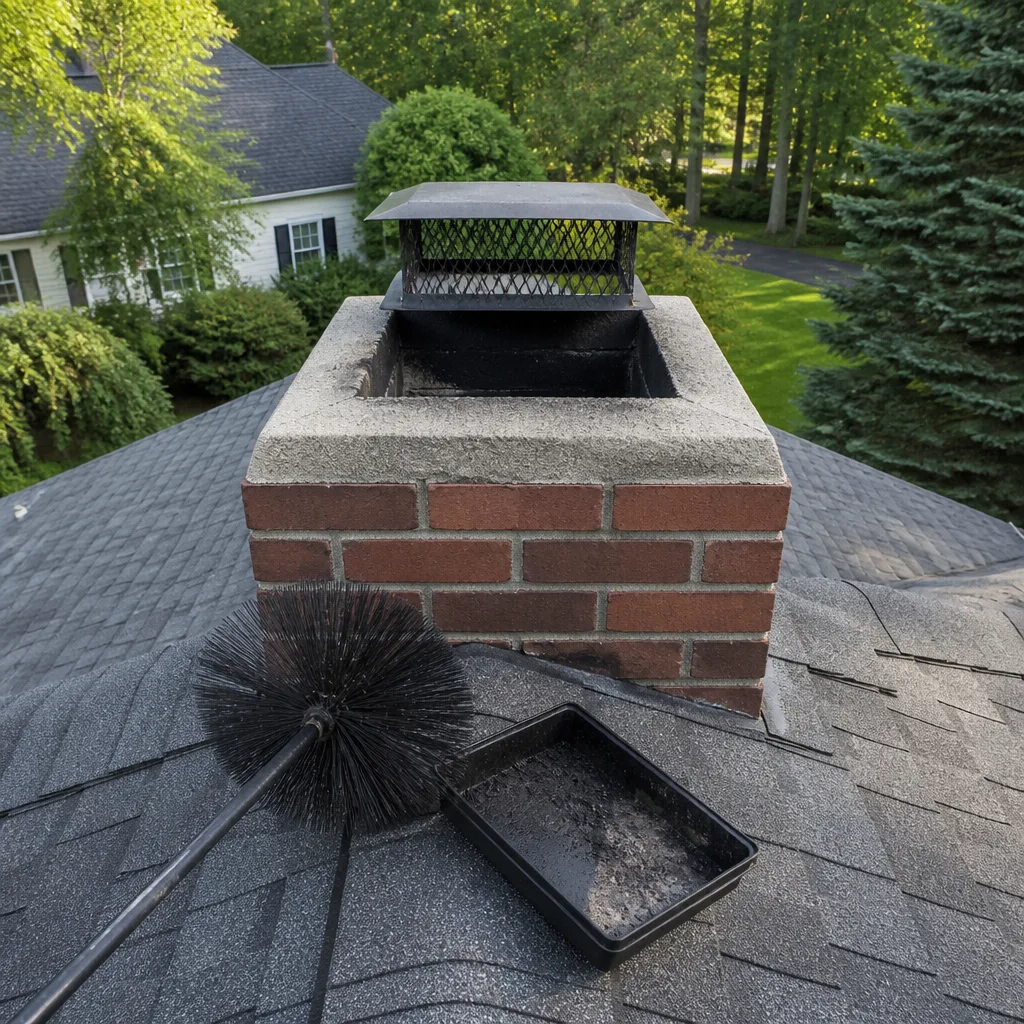
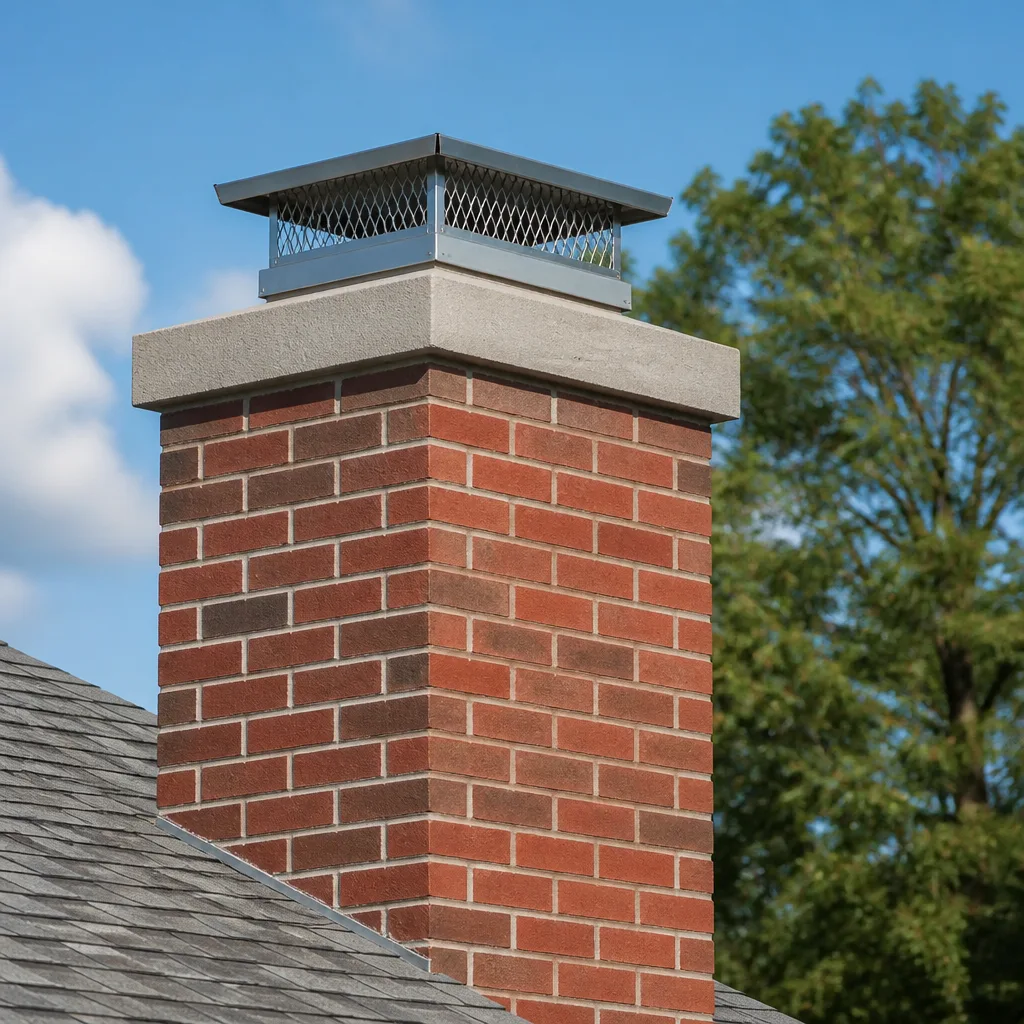
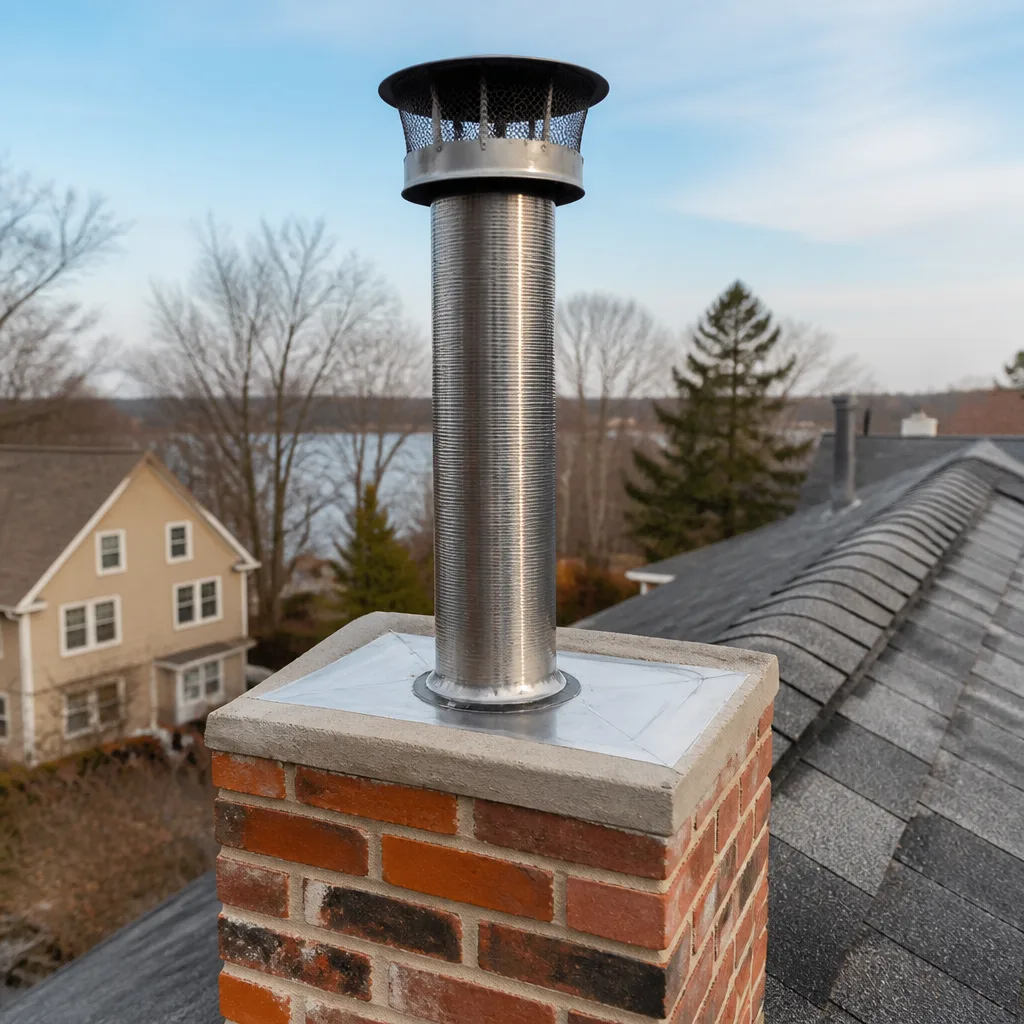
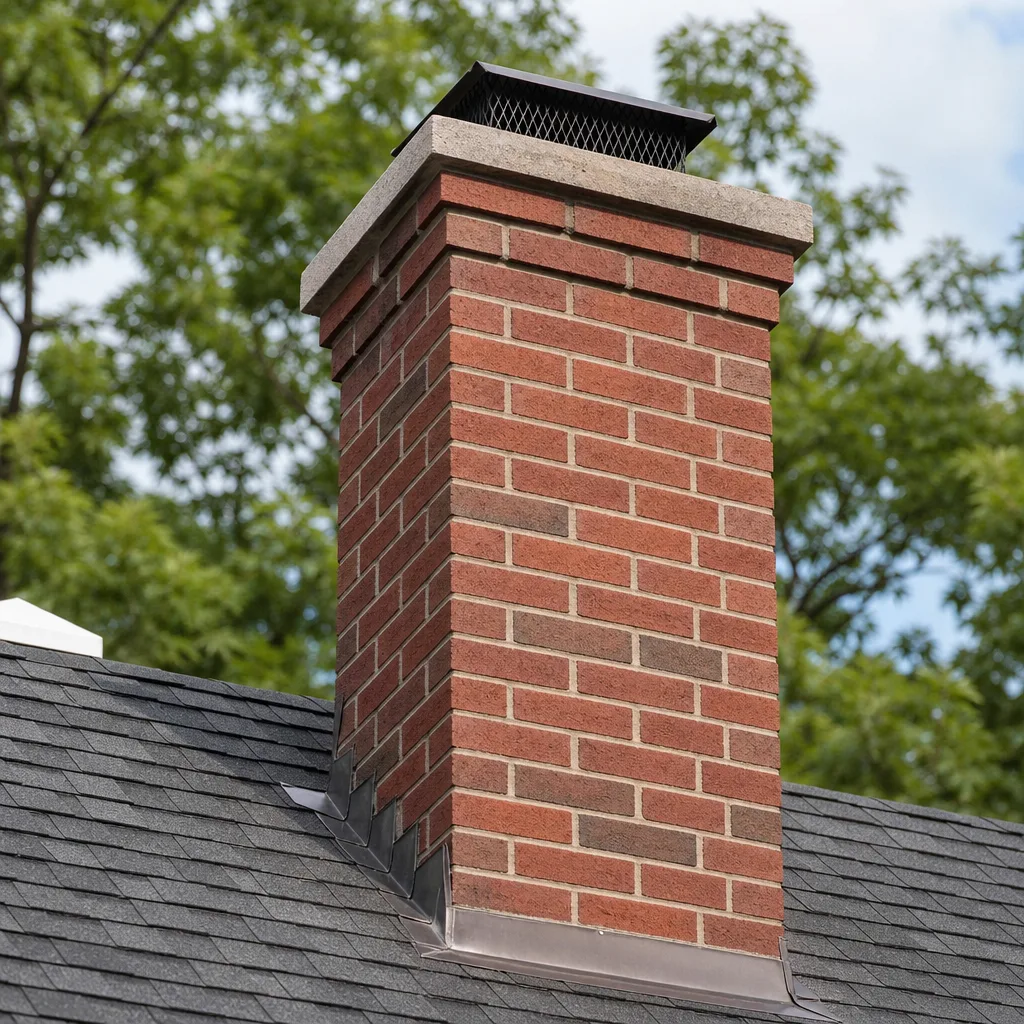
Level 1 sweep and inspection to the NFPA 211 annual standard - flue, crown, cap, and flashing checked and photographed
Chimney sweep logs do not sweep chimneys. They loosen some creosote - which then falls where a brush and vacuum still have to collect it.
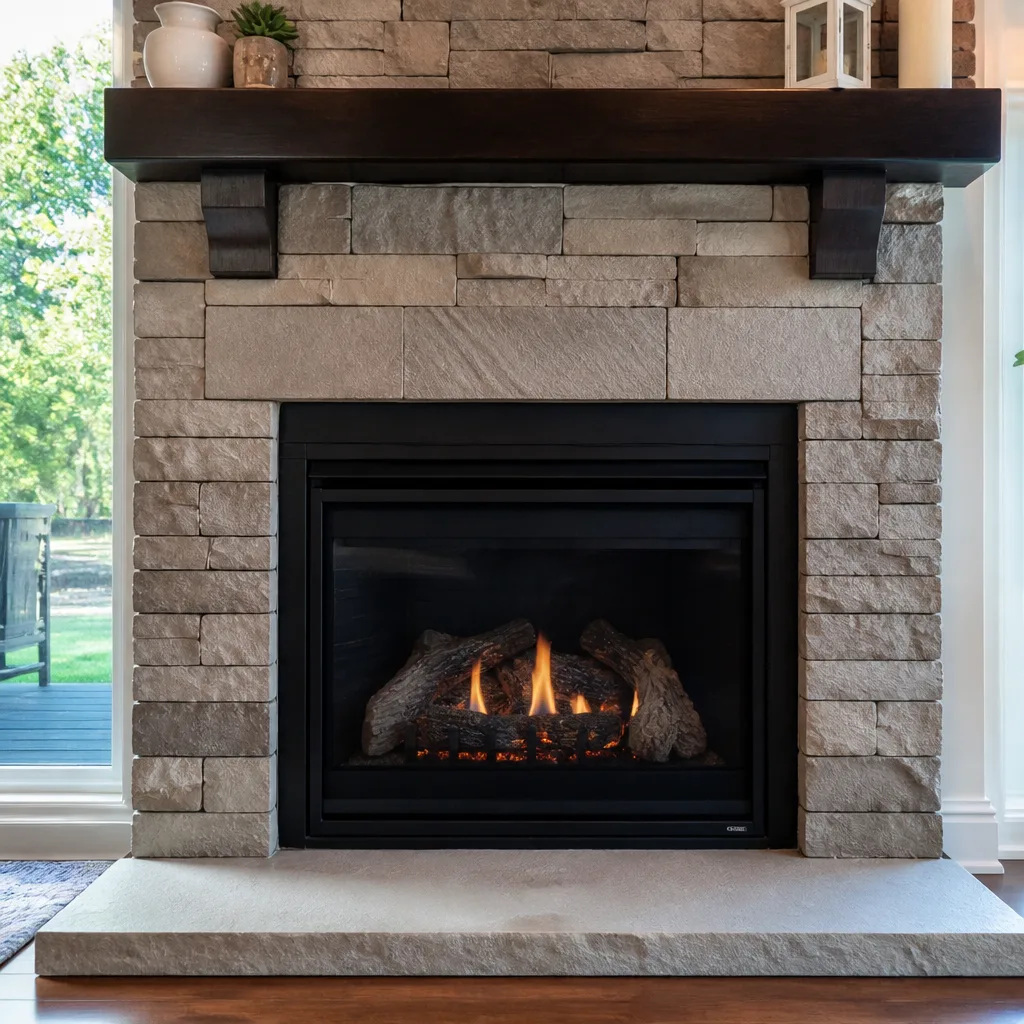
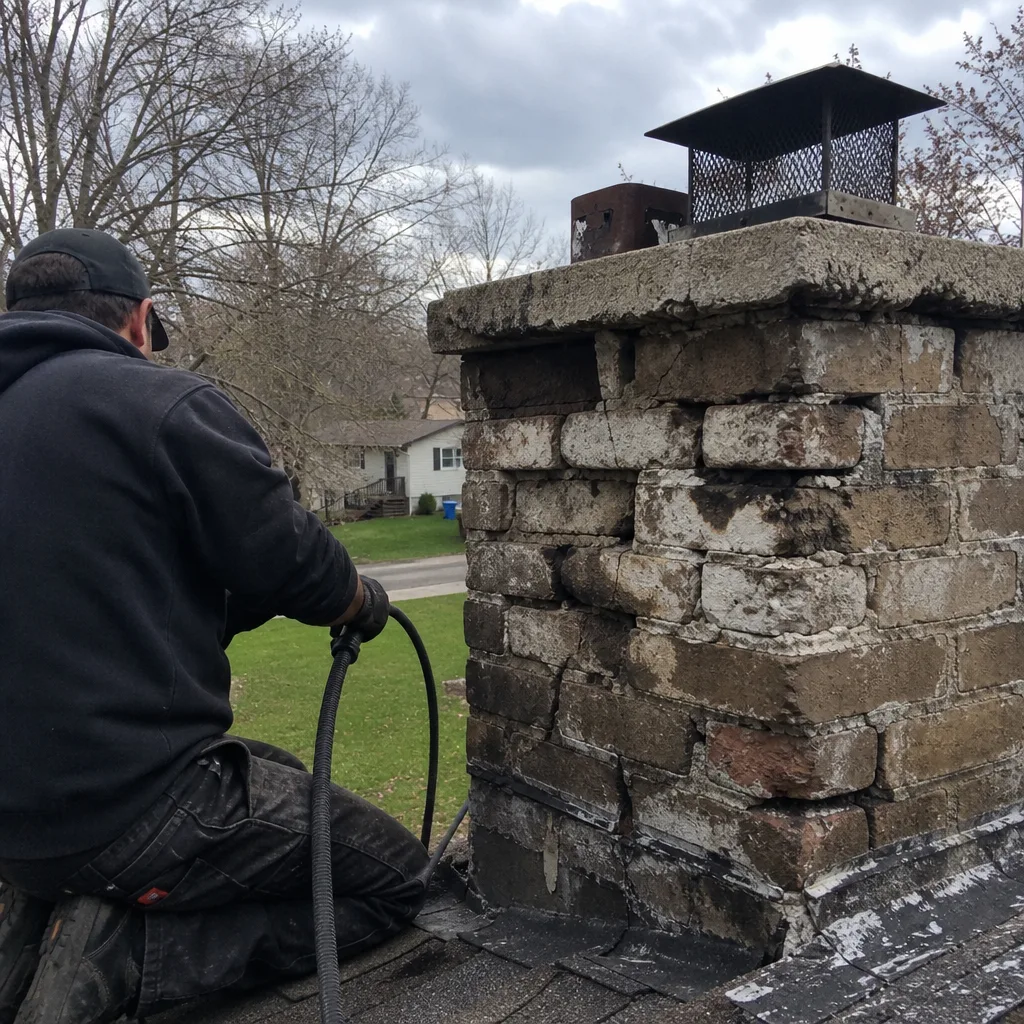 Before
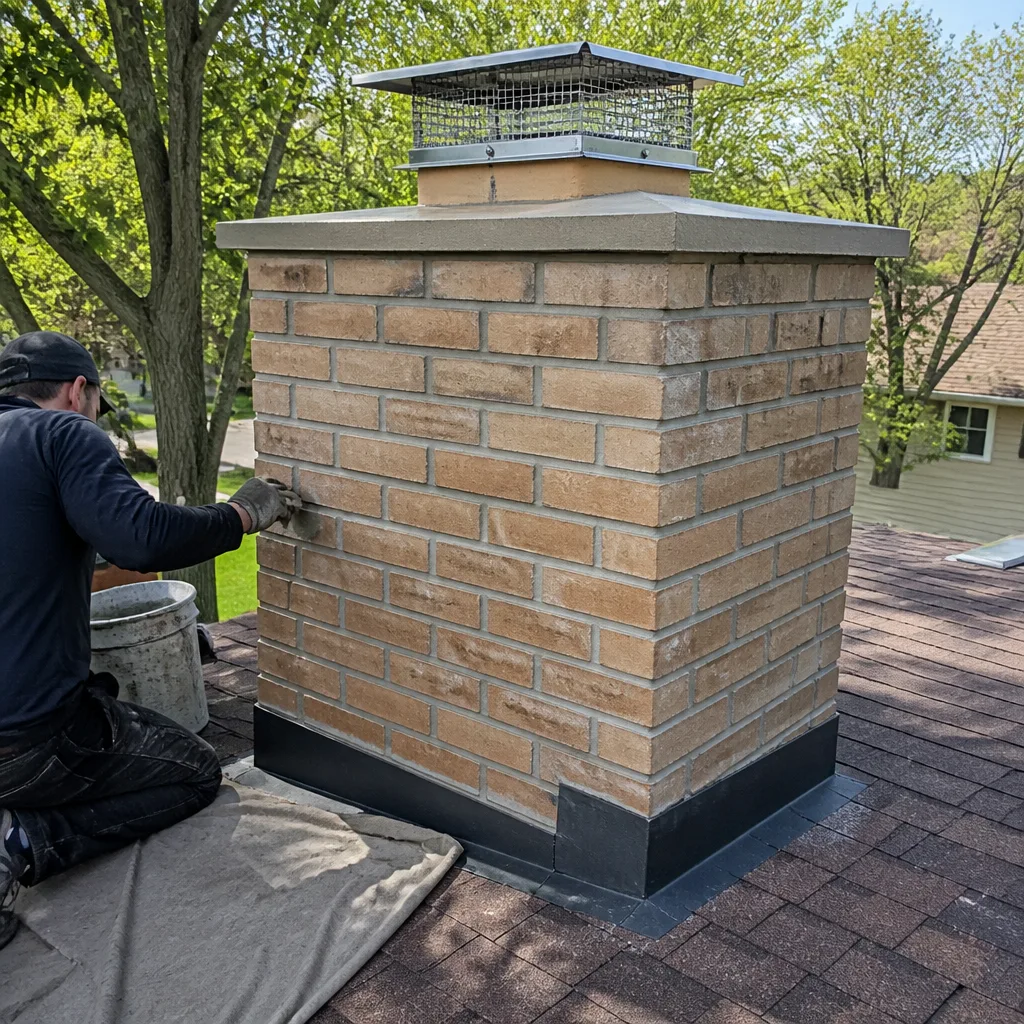 After
After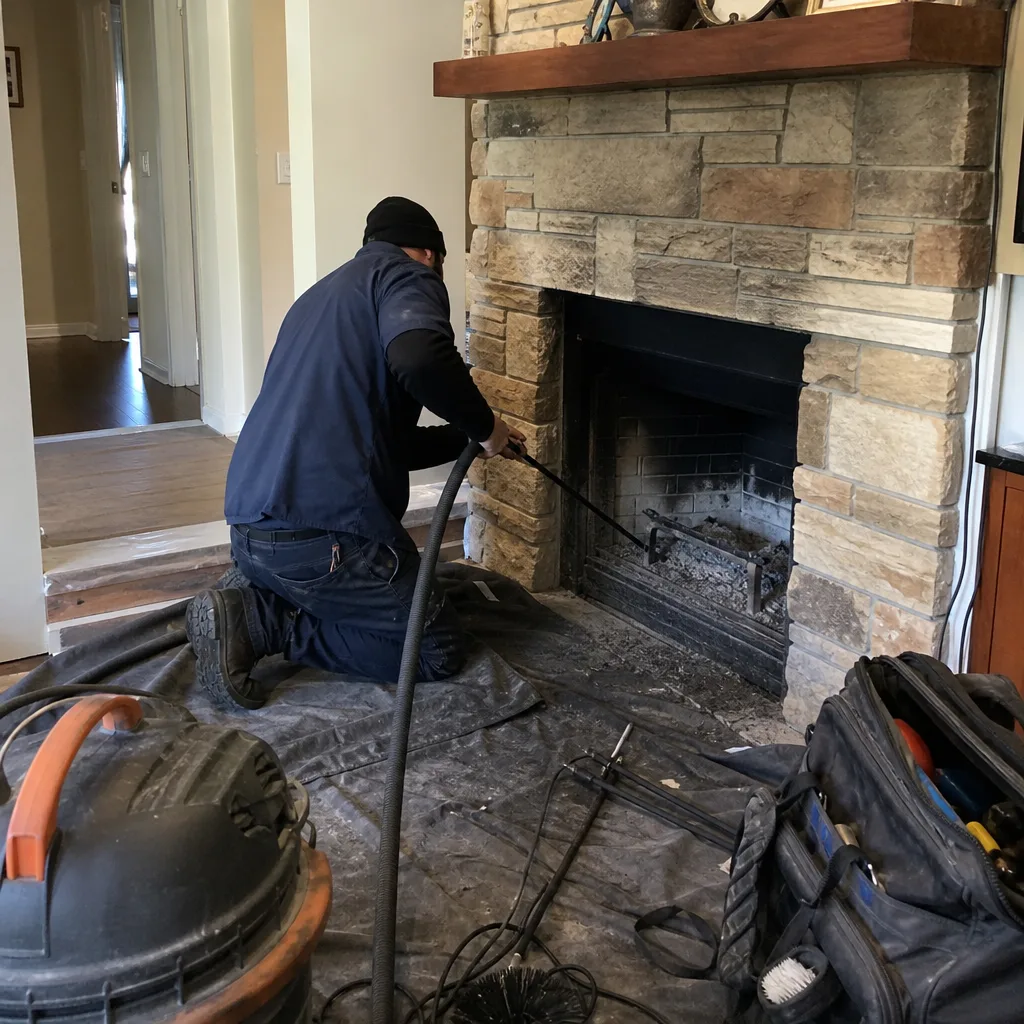 Before
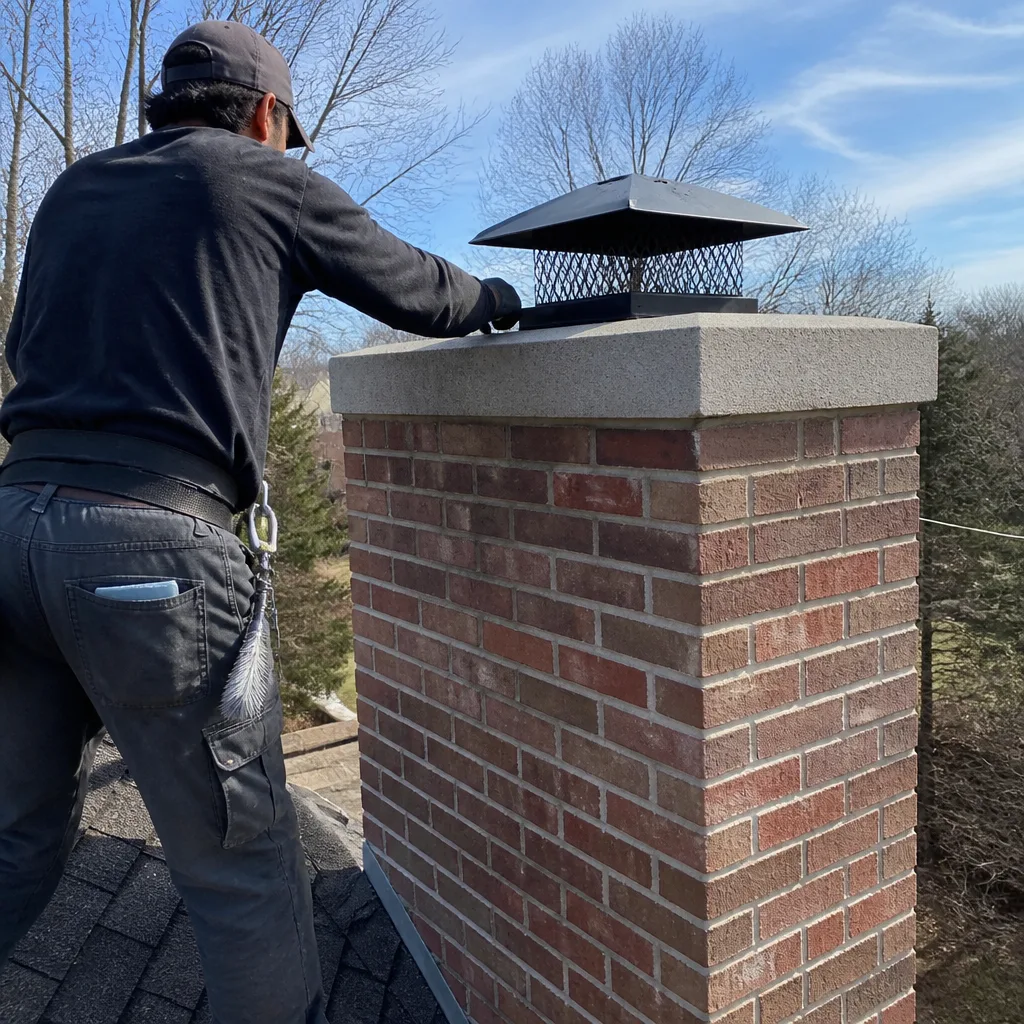 After
After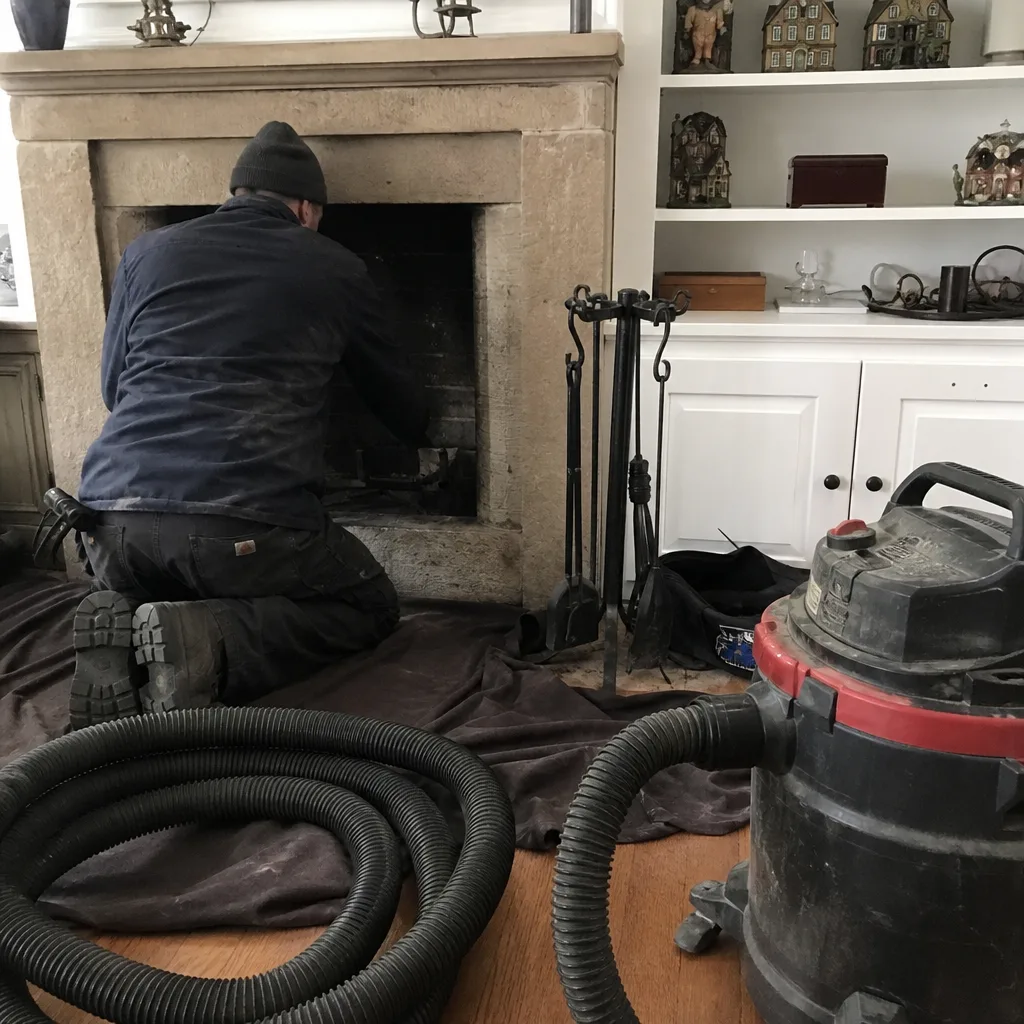 Before
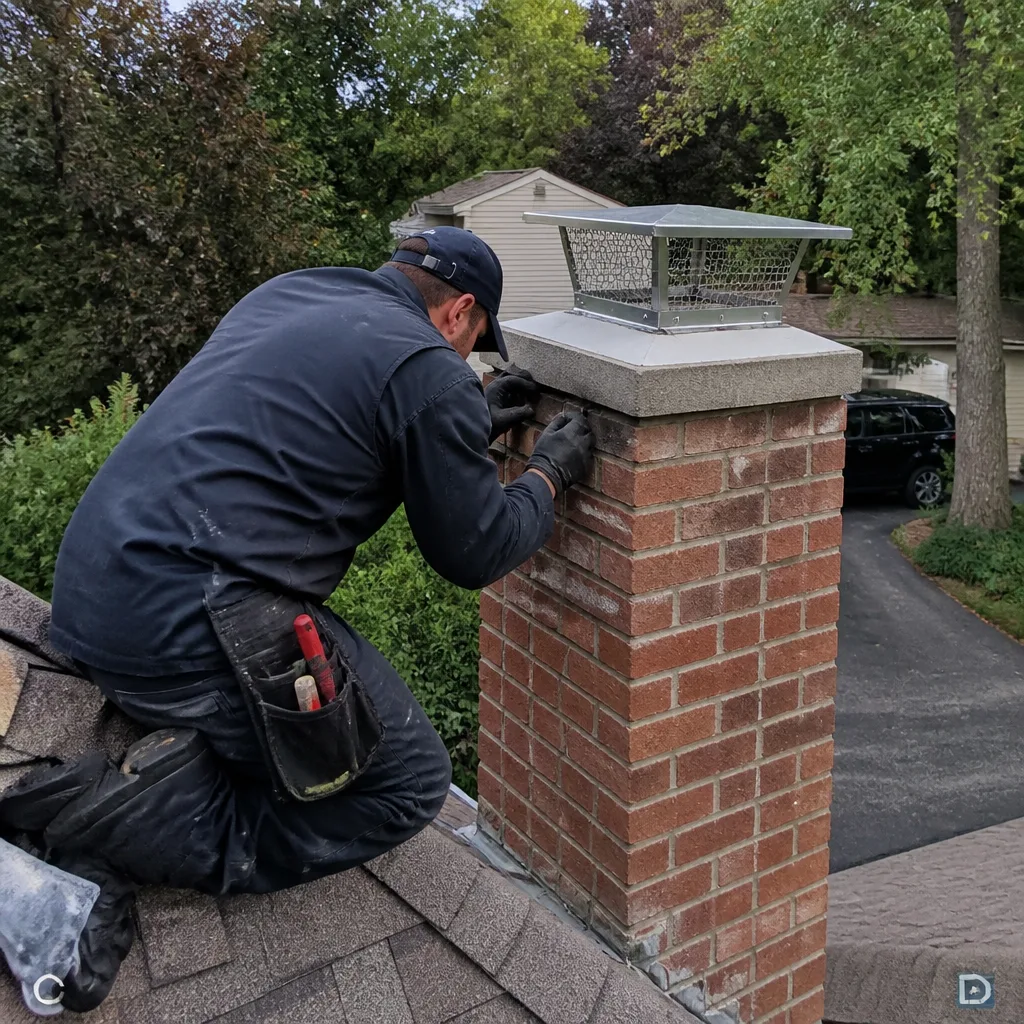 After
AfterSoot Removal in Arlington Heights, IL
How Much Does Chimney Cleaning & Sweep Cost? (2026 Price Guide) - Arlington Heights, IL: typically $149 to $349, depending on how much has built up, how long it’s been since the last cleaning, and whether the firebox or smoke chamber needs hand-scrubbing on top of a standard brush sweep. Most jobs are completed in a single visit, with a written price delivered before anyone touches a brush. If you’d rather talk through what you’re seeing first, call us at (331) 202-2419 – a live person answers every time, around the clock.
Soot is the soft, powdery black byproduct of incomplete combustion. It looks minor and brushes off surfaces easily, which is exactly why people underestimate it. Left alone, a thin soot layer becomes a thicker one, and thick soot layers absorb moisture, accelerate flue liner deterioration, and eventually provide a base for the harder, stickier creosote deposits that carry real fire risk. Our Chimney Cleaning & Sweep in Arlington Heights work covers soot removal as part of a documented, camera-verified visit – not a flashlight look and a handshake.
Corrine Halstead built Level Two Chimney Arlington Heights around one idea: document what’s actually in the flue before quoting, write the price before starting, and hand the homeowner a photo record when it’s done. That’s not a marketing line – it’s the Haven Standard, and it’s been the operating procedure here since 2009, across more than 38,000 inspections and cleanings.
When You Need Soot Removal
Not every homeowner knows what’s accumulating inside the flue. Here are the situations we see regularly in Arlington Heights that point directly to a soot problem:
- A dark, sooty smell in the living room when the fireplace isn’t in use. In Arlington Heights homes with older masonry chimneys – particularly in the Buffalo Grove Road corridor and older ranch-style builds near Camelot – soot deposits absorb humidity and off-gas that distinctive acrid smell even in summer. It usually means buildup on the smoke shelf or smoke chamber walls.
- Visible black staining around the firebox opening or on the lintel. When soot has migrated out of the firebox and onto the surrounding masonry or drywall, the flue has been drafting poorly and soot has been puffing back into the room. That’s a ventilation issue and a buildup issue at the same time.
- A fireplace that smokes excessively on startup. The flue needs a temperature differential to draft properly. A cold flue lined with soot takes longer to warm and drafts worse, creating that initial smoke surge that sends Arlington Heights homeowners reaching for their damper.
- It’s been more than 12 months since the last cleaning. The National Fire Protection Association’s NFPA 211 standard calls for annual inspection and cleaning of any chimney that’s in use. One cord of seasoned hardwood burned through a winter season generates enough soot and light creosote to warrant a cleaning before the next season starts.
- You burned green or wet wood at any point last season. Unseasoned wood doesn’t combust cleanly. It produces significantly heavier soot deposits and accelerates the transition from Stage 1 creosote (flaky, easy to brush) to Stage 2 (tar-like, harder to remove). If you bought a cord last fall that wasn’t fully seasoned, your flue liner is coated.
- You’ve moved into a home and don’t know the chimney’s service history. This is one of the most common calls we get from newer Arlington Heights homeowners. The previous owner used the fireplace; no records exist. A Level 2 camera inspection – included on every visit – answers the question definitively.
Our Soot Removal Process
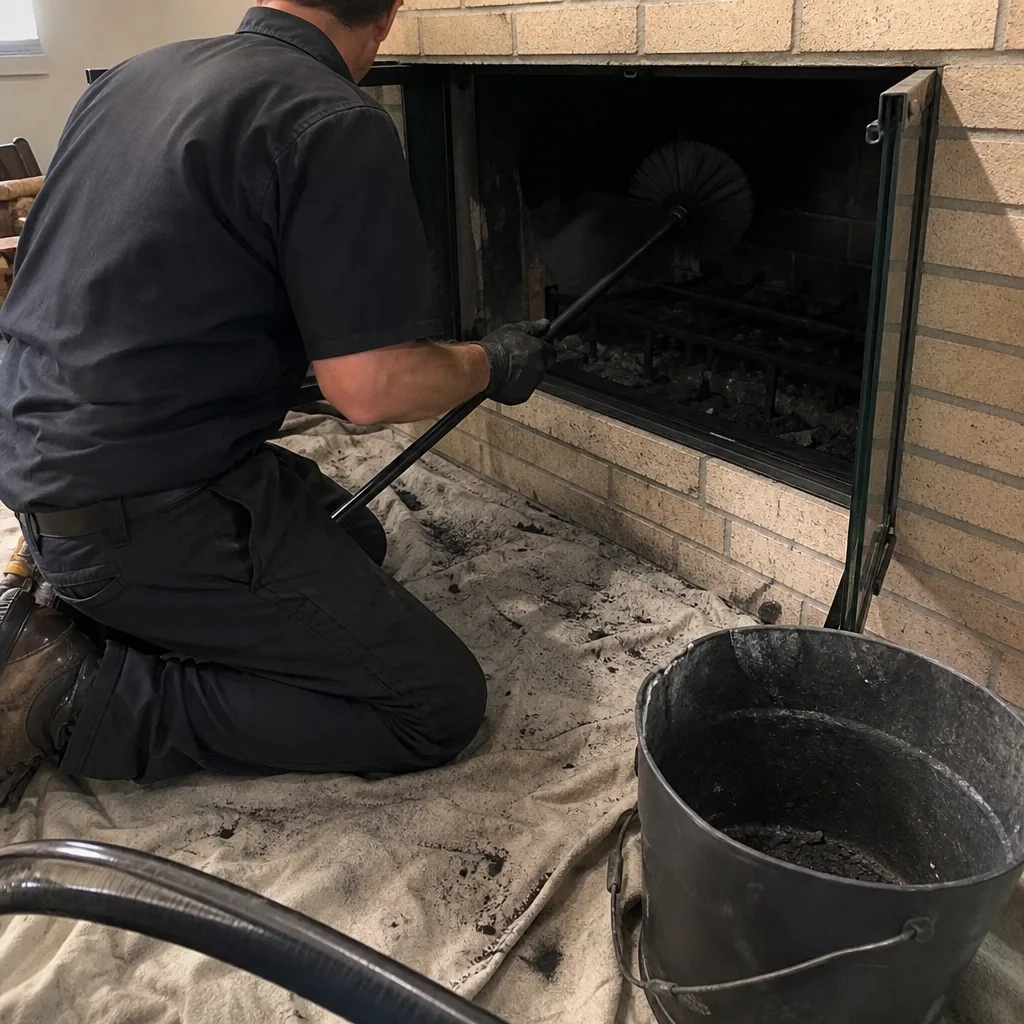
We don’t start cleaning until we know what we’re cleaning. That sequence – inspect, document, quote, work – is the core of every visit Level Two Chimney Co. runs in Arlington Heights.
- Camera-scan inspection before anything else. A NFPA 211 Level 2 inspection means a camera goes down the flue. We’re looking at liner condition, mortar joint integrity, soot depth, and whether the deposit has begun transitioning to Class II or Class III creosote. The camera footage gives us – and gives you – a factual baseline. This is Haven Standard Clause 4, and it’s been standard practice here since 2009.
- Written price, written scope, written warranty – before work starts. Once we know what’s in the flue, we hand you a written quote. The scope says exactly what gets cleaned and how. The price is fixed. The warranty is in writing. Nothing starts until you’ve signed off on those three documents. Haven Standard Clause 1: Have it in writing.
- Firebox and smoke chamber preparation. We lay drop cloths across the hearth and seal the firebox opening with a dust containment barrier before any brushing begins. Arlington Heights homes tend to have open floor plans that connect the living room directly to the kitchen or dining area – soot dust migrating through those spaces is a real outcome when containment isn’t taken seriously. We take it seriously.
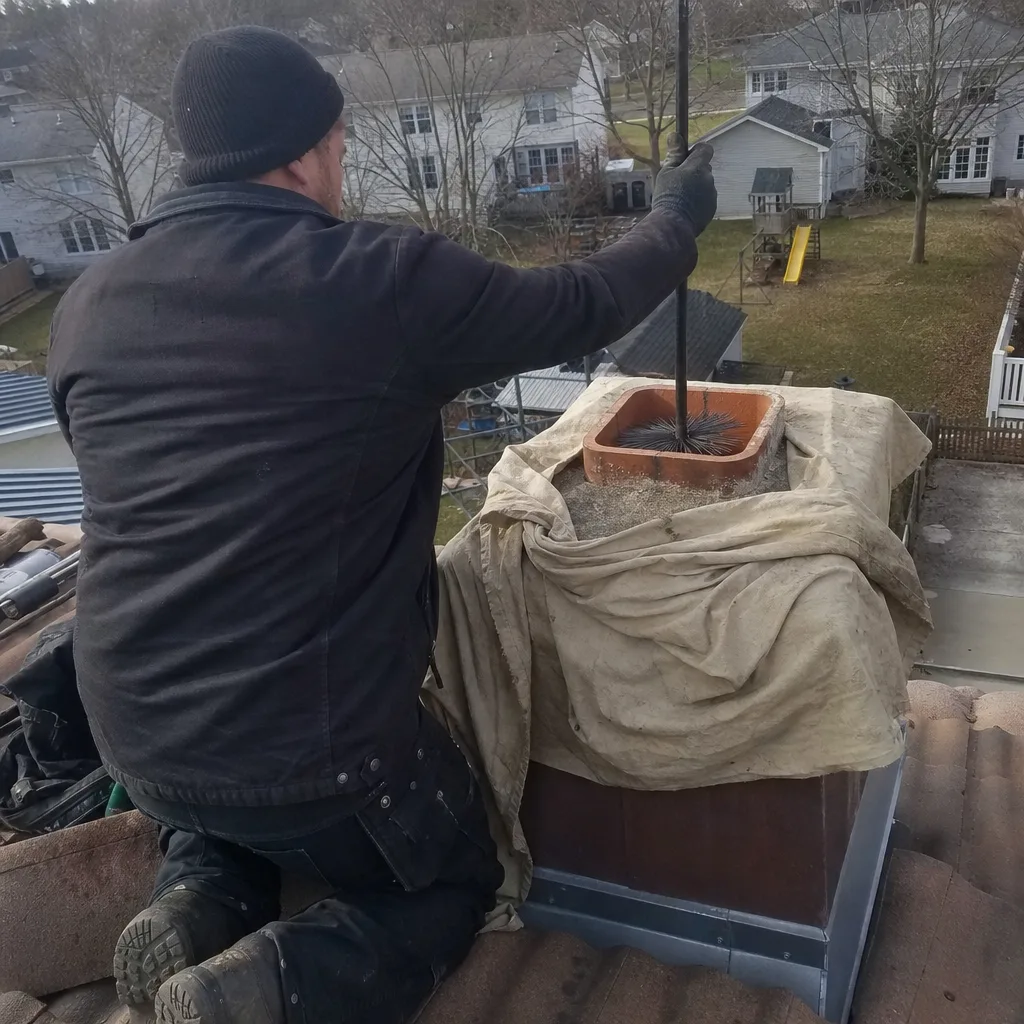
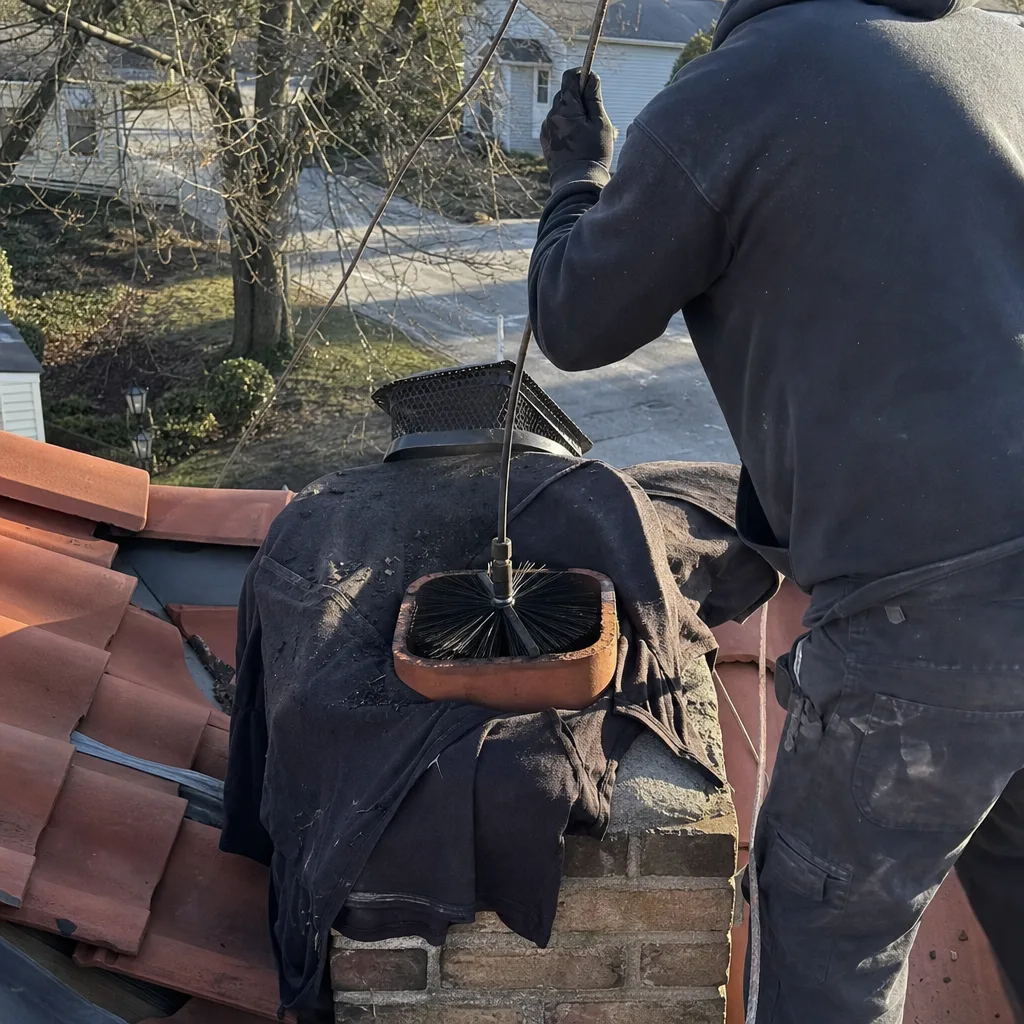
- Mechanical brush sweep of the flue liner. Rotary brushes sized to your liner’s diameter work from the top down, breaking soot and light creosote deposits loose. For clay tile liners in older Arlington Heights masonry chimneys, we use brushes that scrub without scoring the tile. Where the liner is a flexible stainless steel insert – Gelco or DuraFlex, typically – we adjust brush stiffness accordingly.
- Hand-cleaning of the smoke chamber and smoke shelf. The smoke chamber is the funnel-shaped space between the firebox throat and the flue liner; the smoke shelf catches falling debris and water. These surfaces accumulate soot at a disproportionate rate and can’t be reached with a standard chimney brush. Hand-scrubbing with a wire brush and vacuum is the only way to do it properly.
- Post-cleaning camera confirmation and photo documentation. After the cleaning, the camera goes back down. The post-cleaning images are compared to the pre-cleaning baseline and included in the photo record you take home. If we found a cracked tile, a deteriorating mortar joint, or a smoke chamber corbelling issue that needs attention, it’s photographed, described in plain terms, and quoted separately in writing – not verbally added to the bill.
 Before
 After
AfterSoot Removal Pricing in Arlington Heights
Soot removal in Arlington Heights costs $149 to $349 for most residential jobs. That range reflects real variation – a fireplace used a few times a season with seasoned hardwood is a different job than a wood-burning insert run heavily through a Chicago-area winter. Here’s how the price breaks down:
- Standard soot sweep (single-flue, light-to-moderate buildup): $149 – $219. This covers the camera inspection, brush sweep, smoke shelf cleaning, containment, and photo record. Most jobs where the fireplace has been used seasonally and cleaned within the last two years land here.
- Moderate buildup or smoke chamber hand-scrubbing: $220 – $289. When soot has built up over two or more seasons, or when the smoke chamber surfaces need hand-work beyond the standard brush sweep, the job takes more time and falls into this range.
- Heavy soot or early-stage creosote conversion: $290 – $349. This is where soot has begun transitioning toward Stage 2 creosote – darker, stickier deposits that resist a standard brush. Additional chemical treatment or rotary mechanical cleaning is required. If Class III creosote is found (glazed, hardened), that’s a separate restoration service and priced accordingly after the camera inspection.
- Firebox panel cleaning add-on: $45 – $85. Soot staining on refractory firebox panels is cosmetic until it isn’t – staining can obscure hairline cracks in the panels that matter structurally. We can quote this as an add-on at the time of service.
Every quote is a fixed written price. If the camera reveals that the job is more involved than the initial walk-around suggested, we tell you before we start – not after. No after-the-fact adjustments, no verbal add-ons, no “while we were in there” charges that weren’t pre-approved in writing.
We also offer a Free Second Opinion on any written estimate from another company. Bring us the quote in writing and we’ll tell you whether the scope, the price, and the materials are fair – no obligation to hire us.
Why Soot Buildup Moves Faster in Arlington Heights Winters
Arlington Heights sits in a climate band where winter temperatures regularly drop into the single digits Fahrenheit, and that matters for chimney performance. Cold flue temperatures create worse draft conditions – the temperature differential between the firebox and the outside air is the engine that pulls combustion gases up and out. When a chimney is already partially insulated by a soot layer and the outside temperature is 8 degrees, that draft performance degrades further. Homeowners compensate by burning hotter fires, which creates more combustion byproducts, which accelerates soot accumulation.
We also see a specific pattern in the ranch-style and split-level homes built in Arlington Heights between the late 1950s and early 1980s: original clay tile flue liners, typically 8×8 or 8×13 nominal interior dimensions, with mortar joints that have had 40-plus years to soften and crack. Soot and moisture work into those joints together. The cleaning isn’t just about fire safety – it’s about stopping the acid-and-moisture cycle that eats liner mortar from the inside. A camera inspection after the cleaning documents the joint condition so you know whether you’re dealing with a sweeping issue or a liner repair issue.
The newer construction closer to the Northgate area and along Kirchhoff Road tends toward gas-log fireplace inserts, which produce far less soot but are not immune – gas combustion still generates some byproduct, and a blocked flue from debris or animal nesting is a carbon monoxide risk. If you have a gas appliance vented through a masonry chimney, the inspection matters as much as the cleaning.
What the 365-Day Done Right Promise Means for Soot Removal
Every soot removal job we complete in Arlington Heights is covered by the 365-Day Done Right Promise. If the work isn’t right – the smoke shelf wasn’t fully cleaned, soot odor returns within the warranty period, something was missed in the camera review – we come back and make it right. That’s not a verbal reassurance; it’s a written term on every job.
The photo record from the post-cleaning camera pass is what makes that promise enforceable. When we document the condition of the flue liner and smoke chamber on completion and put those images in your file, there’s no ambiguity about what was done and what was found. If something changes within the year, we have a baseline. That archived documentation practice has been Level Two’s standard since 2009 and became Clause 4 of the Haven Standard.
Corrine Halstead’s team includes background-checked, uniformed technicians – each visit is assigned to a named tech, and you’ll receive a text when they’re on their way. The license number is on the page. The price is in writing before the job starts. The warranty is in writing before the job starts. That’s the full picture of what you’re agreeing to when you book with Level Two in Arlington Heights.
FAQs – Soot Removal in Arlington Heights
How much does soot removal cost in Arlington Heights?
Soot removal in Arlington Heights costs $149 to $349 for most single-flue residential jobs, with the range driven by how much has accumulated, whether the smoke chamber needs hand-scrubbing, and whether early-stage creosote deposits are present alongside the soot. The written price is fixed before work begins – no after-the-fact adjustments. Call (331) 202-2419 to describe what you’re working with and we can narrow that range before you book.
Is soot dangerous, or is creosote the real concern?
Soot on its own is less combustible than creosote, but it’s not harmless. Heavy soot deposits absorb moisture, produce acrid off-gassing (that musty fireplace smell in summer), and accelerate deterioration of clay tile liner mortar. More practically, soot is Stage 1 of a progression – left uncleaned, it converts to Stage 2 creosote (tacky, sticky) and eventually Stage 3 (glazed, highly combustible). The chimney fire risk lives in Stage 3 creosote. The time to remove soot is before it reaches that stage. Our camera inspection tells you exactly which stage you’re in before we quote anything.
Can you clean soot from my chimney in a single visit?
Yes – the large majority of Annual Sweep and soot removal jobs in Arlington Heights are completed in one visit, typically in 90 minutes to two and a half hours depending on flue height, liner configuration, and buildup level. The camera inspection at the start of the visit determines the scope; if the job is more involved than expected, we tell you before proceeding. We don’t schedule a “diagnostic visit” and then a separate cleaning visit just to generate two billing events.
What’s the difference between a chimney sweep and soot removal?
Soot removal is one component of a full chimney sweep. A Level Two sweep includes the NFPA 211 Level 2 camera inspection, brush sweep of the flue liner, hand-cleaning of the smoke chamber and smoke shelf, containment of dust, and a post-cleaning photo record. “Soot removal” sometimes refers narrowly to the mechanical cleaning of soot deposits specifically – as distinct from creosote treatment, which requires different methods. When you call us, we’ll look at what’s actually in the flue first and quote the exact scope in writing. You can read more about the full scope of what a sweep covers on our Chimney Cleaning & Sweep in Arlington Heights page.
Book Your Soot Removal Appointment
If your fireplace has been in use this season – or if you moved into an Arlington Heights home and have no record of the last cleaning – search Chimney Cleaning & Sweep Near Me in Arlington Heights, IL or call (331) 202-2419 now. A live person answers that number 24 hours a day, 7 days a week. We’ll take a few details, give you a preliminary range, and book a visit where the camera goes in first and the written price comes before any work starts. Estimates are free. The 365-Day Done Right Promise and a documented photo record come with every job. We’ve completed more than 38,000 inspections and cleanings since 2009, every one with a written price before work started and a photo record when it was done. The same standard applies to every soot removal visit we run in Arlington Heights.
You can also learn more about what we do and how we work by visiting our home page.
Written by Corrine Halstead, Owner at Level Two Chimney Arlington Heights, serving Arlington Heights.