
Last updated September 22, 2026
Level 1 sweep and inspection to the NFPA 211 annual standard - flue, crown, cap, and flashing checked and photographed
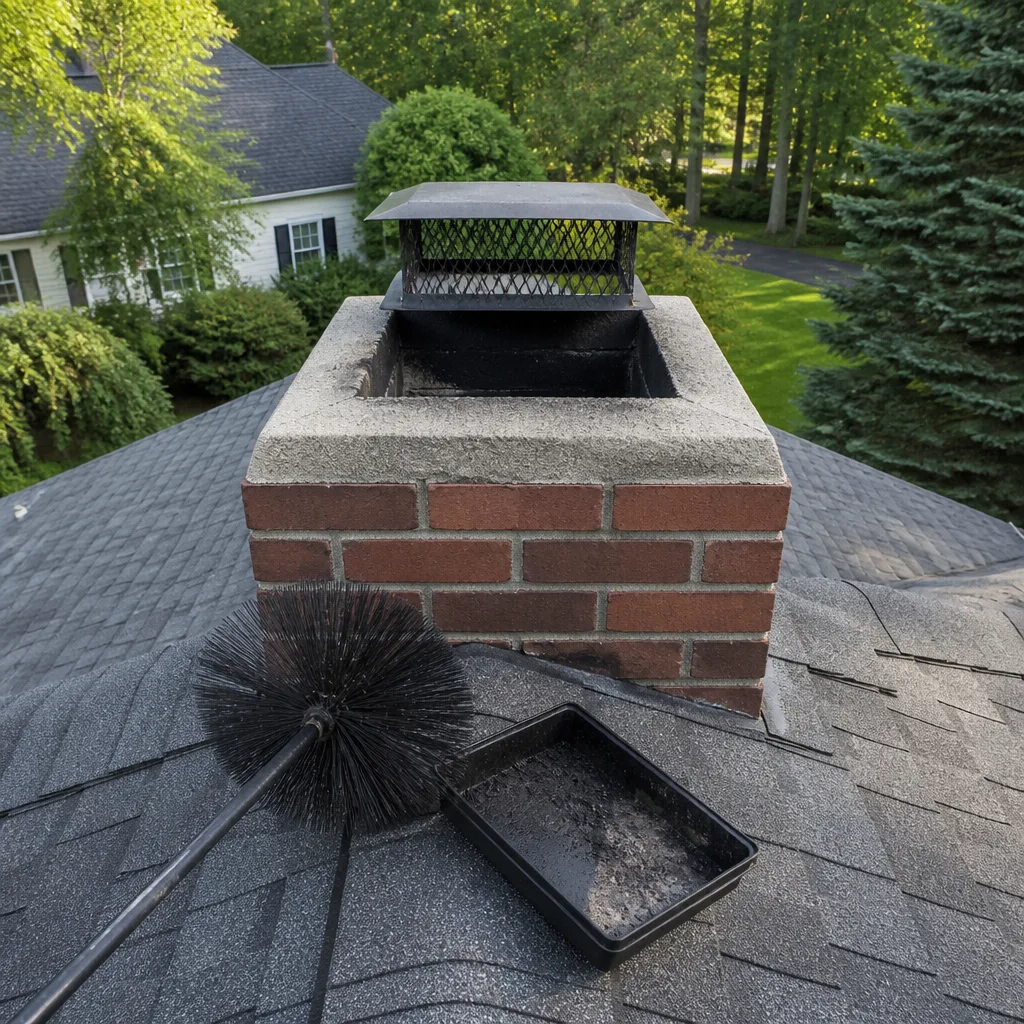
Chimney sweep logs do not sweep chimneys. They loosen some creosote - which then falls where a brush and vacuum still have to collect it.
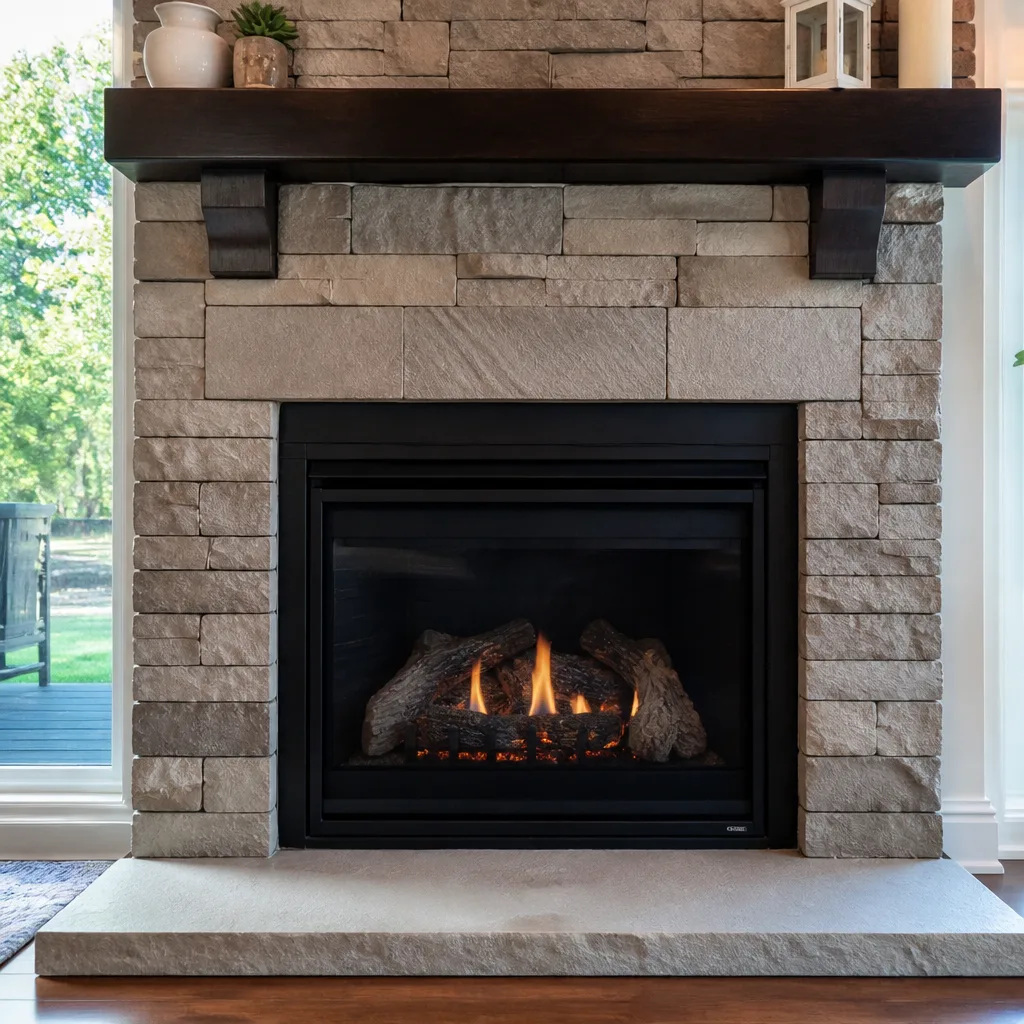
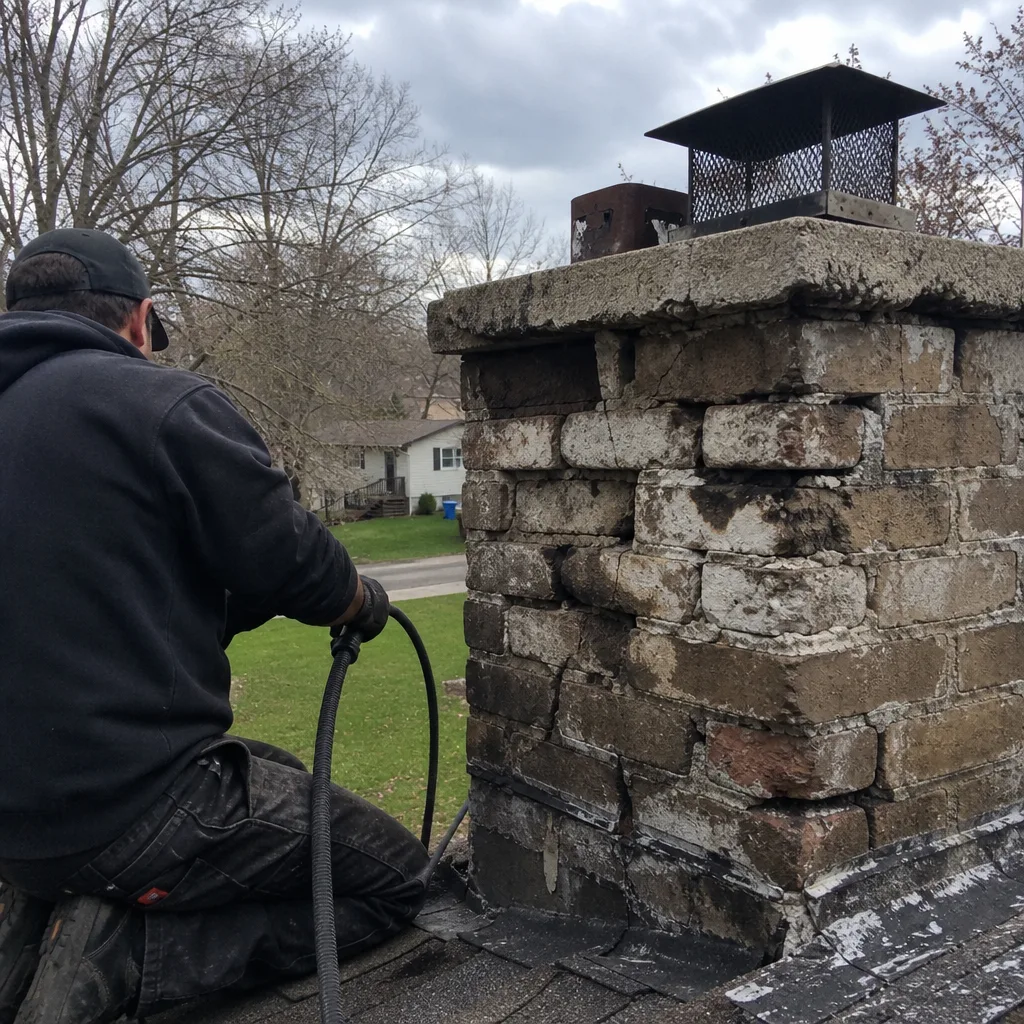 Before
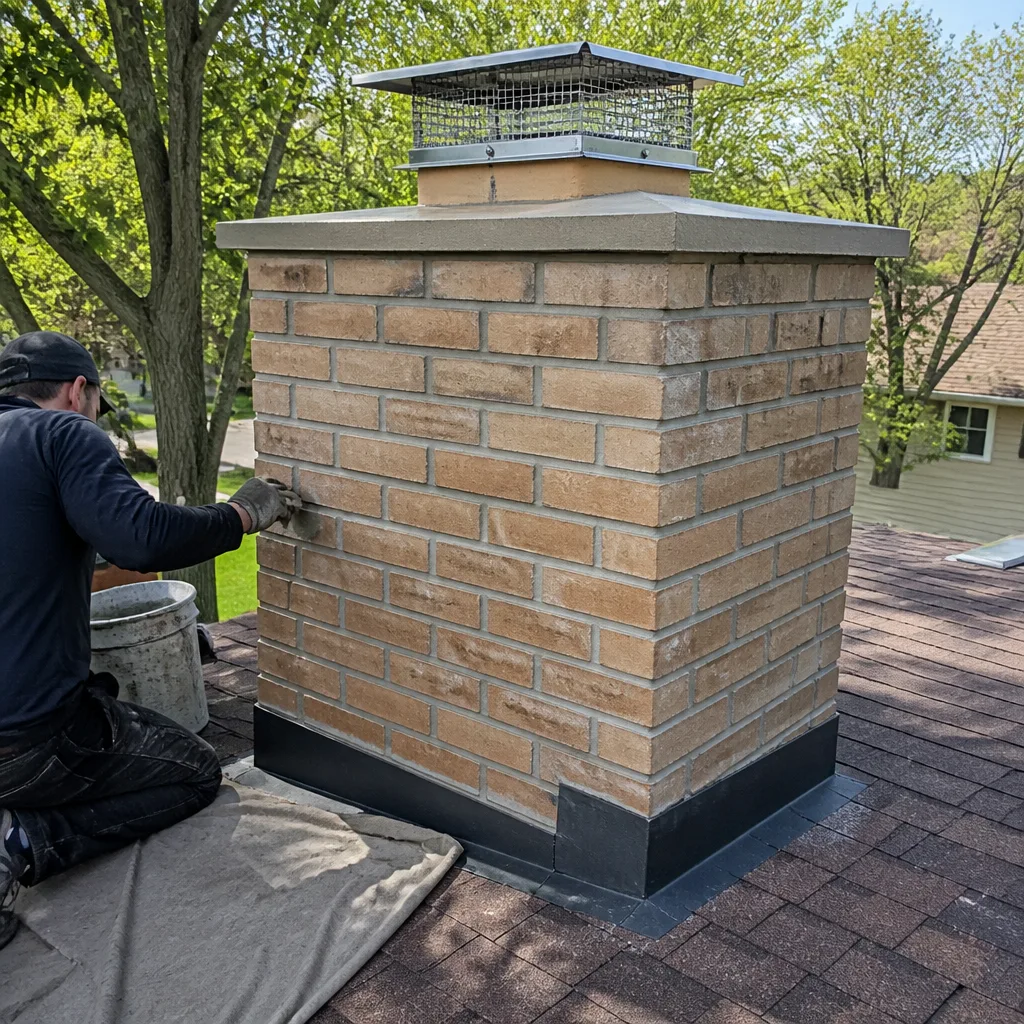 After
After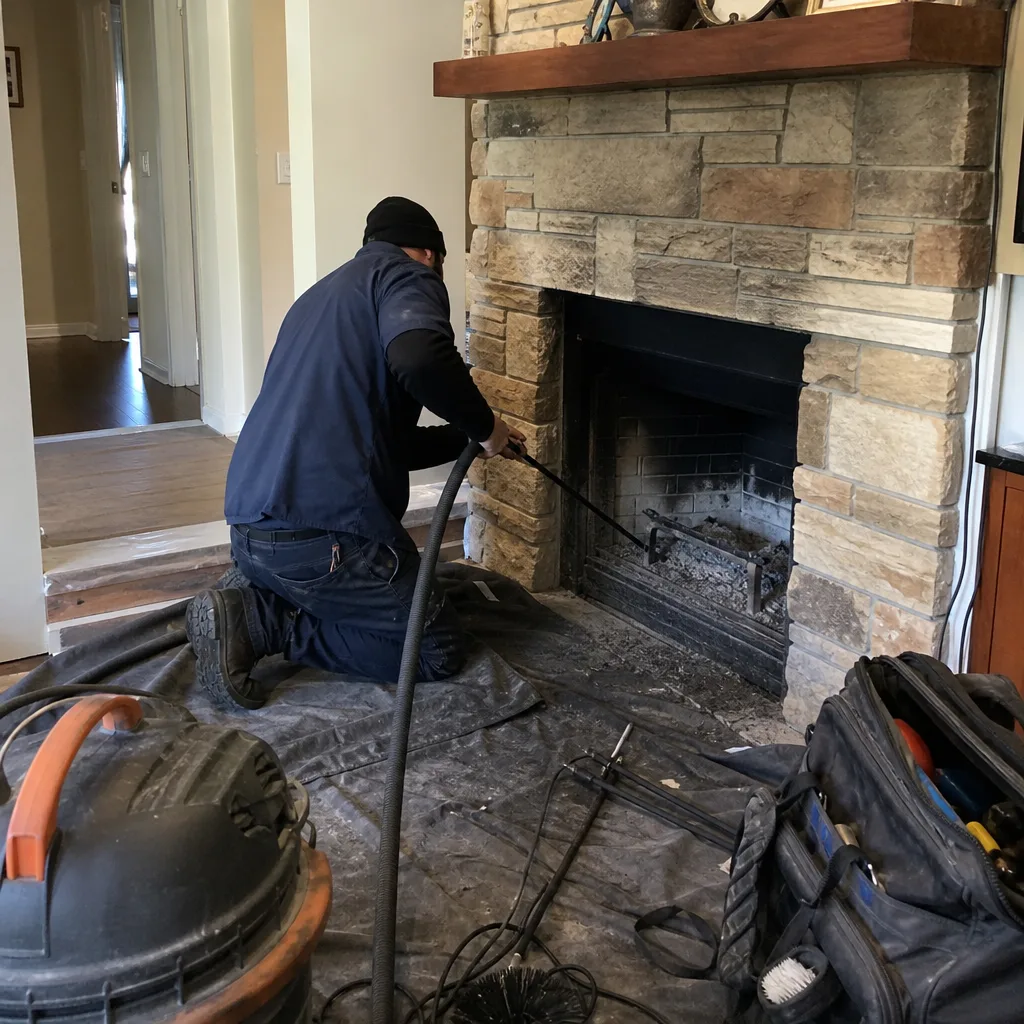 Before
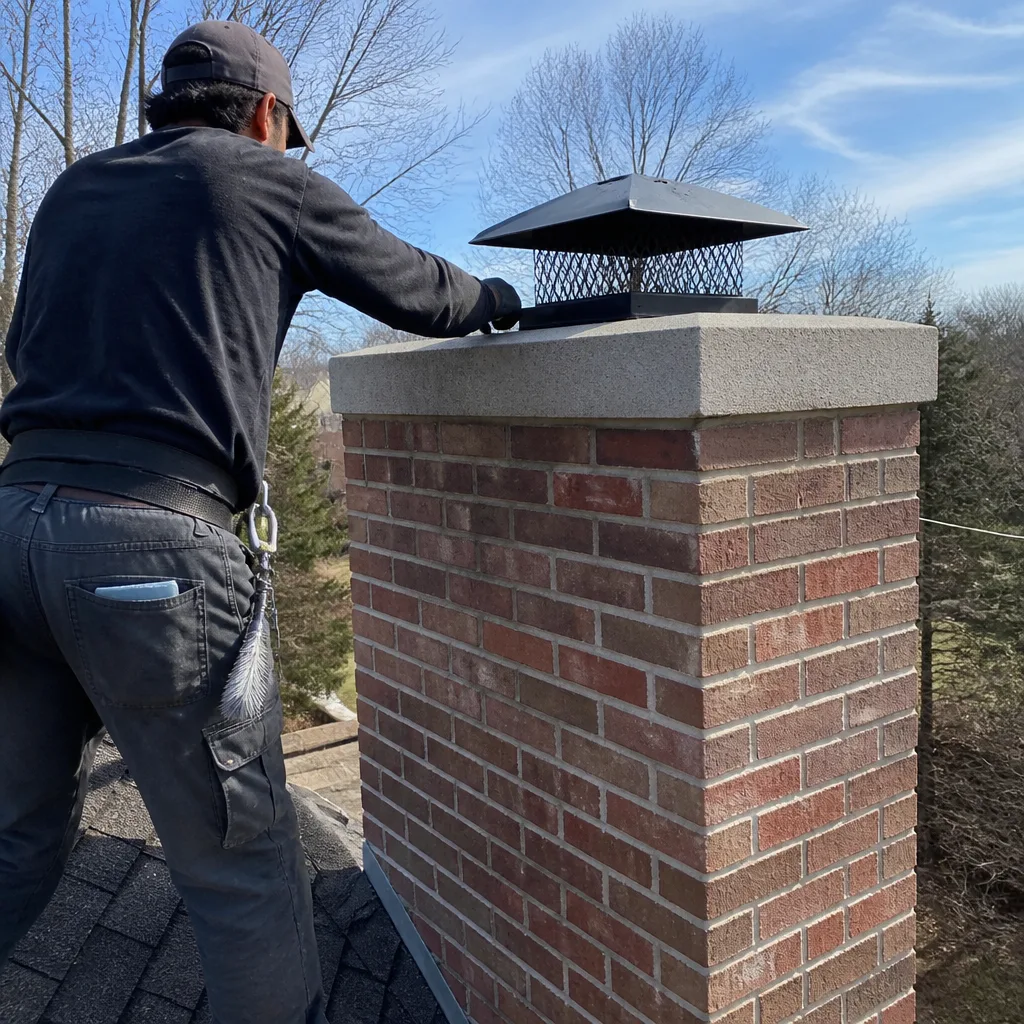 After
After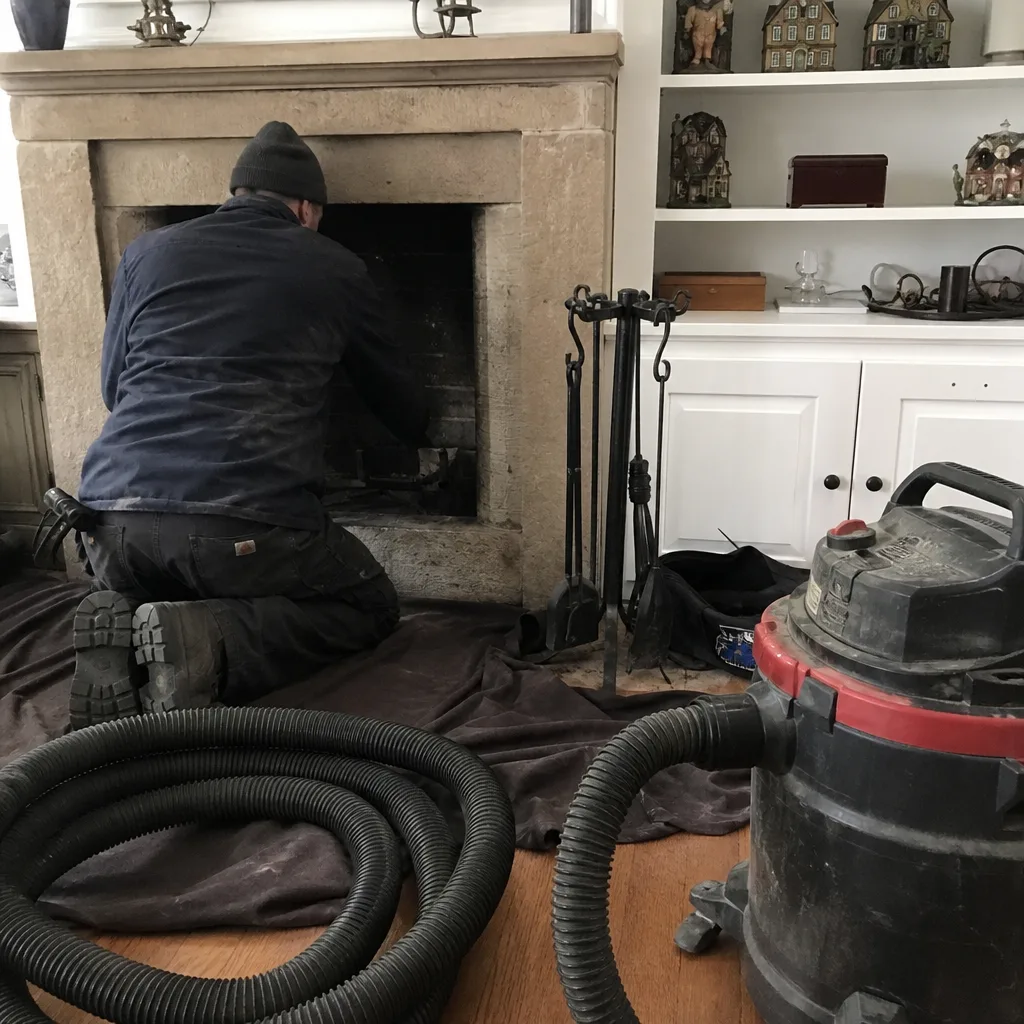 Before
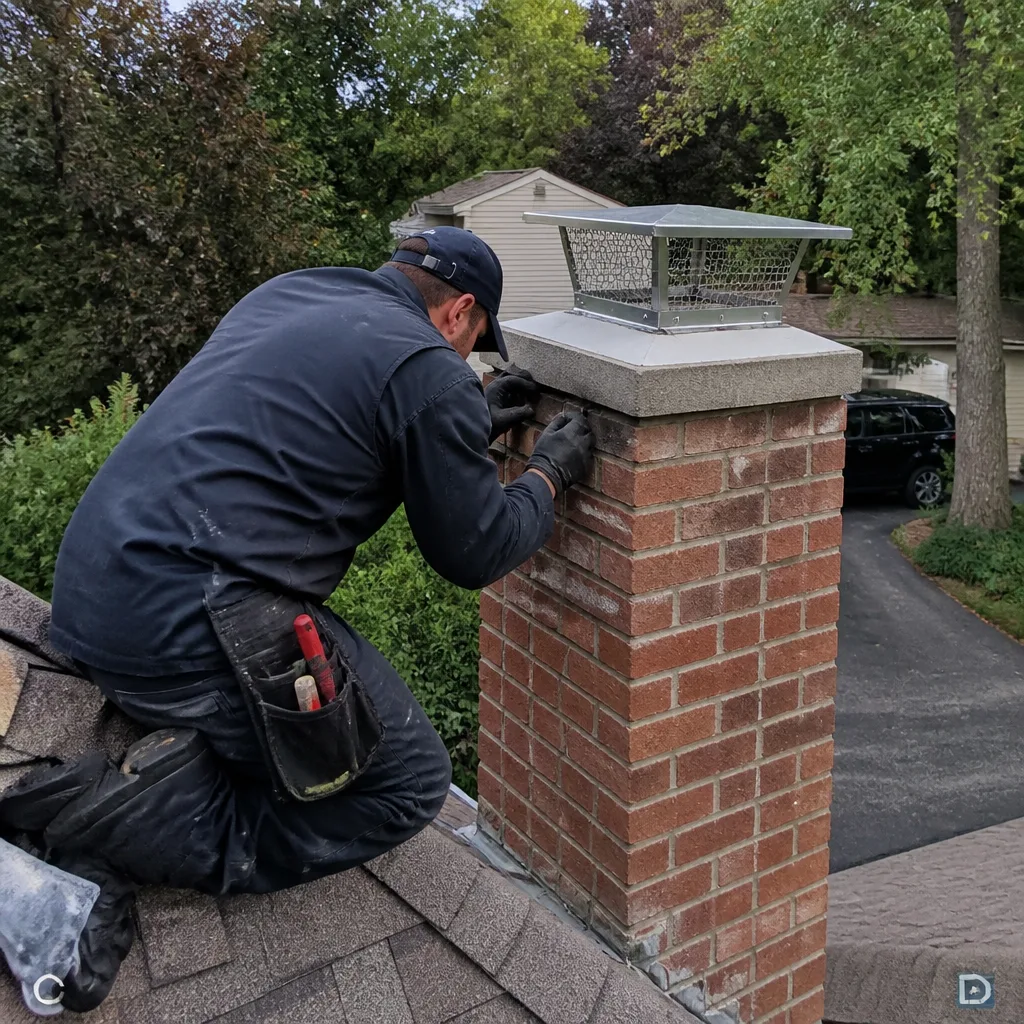 After
AfterSeasonal Chimney Cleaning Care for Arlington Heights: Year-Round Homeowner’s Guide
The average Arlington Heights home burns wood or gas from October through April - seven months - but almost every chimney company schedules one annual visit. That math only works if nothing changes between cleanings, and in a Chicago-area climate, a lot changes. Spring freeze-thaw cycles crack crowns. Summer thunderstorms loosen caps. Fall’s first cold snap sends squirrels down flues that sat open all August. In this guide, you’ll learn why treating your chimney as a four-season system prevents the expensive surprises that show up in November, and how to time each service so you’re never catching up when you should be burning. For more guides & resources on chimney care, visit our blog.
Quick Answer
Chimney cleaning in Arlington Heights should follow a four-season schedule: spring inspection for moisture damage, summer cap and crown repair before animal season, pre-season cleaning in early fall, and mid-winter monitoring for creosote buildup. Gas fireplaces need annual inspection but typically only need sweeping every 2-3 years, while wood-burning systems require cleaning before each burn season and again mid-winter if used daily.
Table of Contents
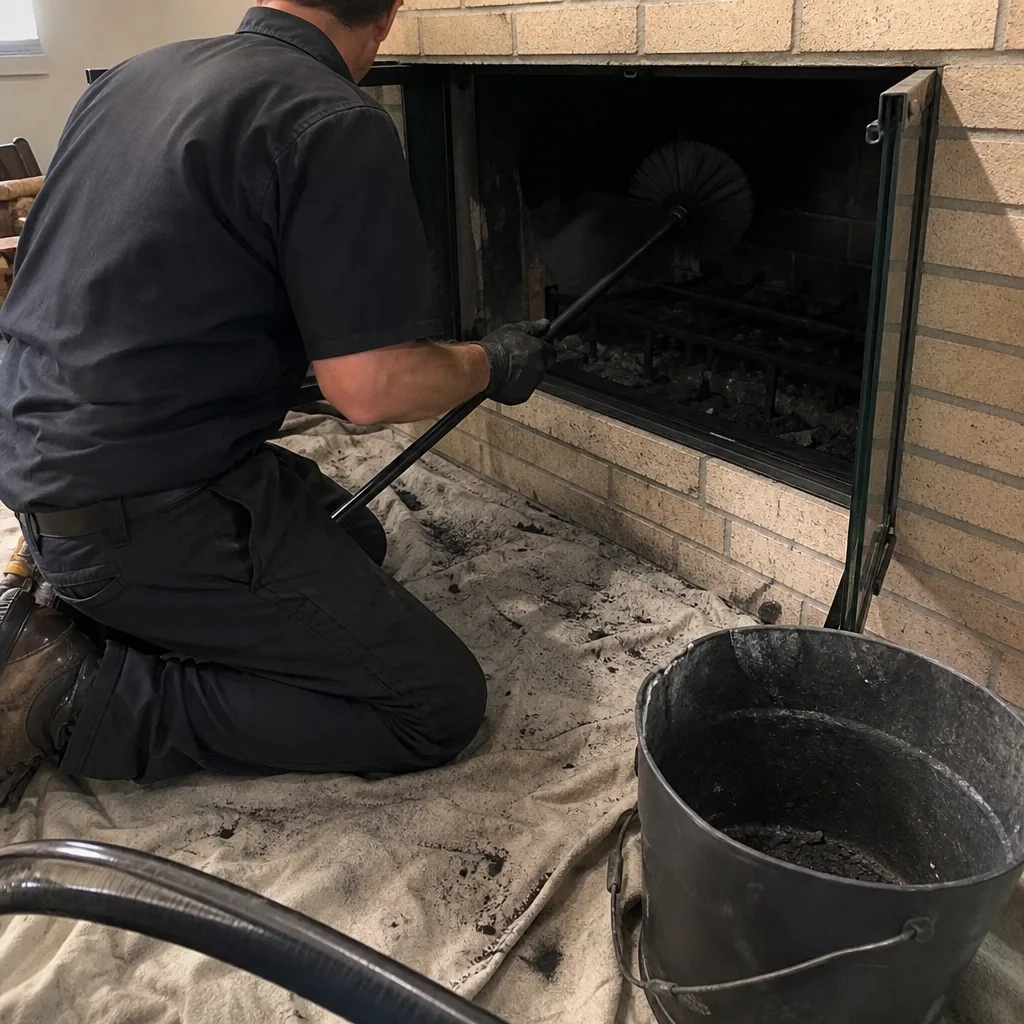
- Spring: The Hidden Damage Season
- Summer: Nesting, Caps, and Storm Repairs
- Fall: Pre-Season Readiness Window
- Winter: Creosote Accumulation and Mid-Season Checks
- Why Gas and Wood Fireplaces Need Different Schedules
- The Two-Minute Post-Storm Ground-Level Check
- How Service History Changes What Your Technician Can Find
- What Seasonal Chimney Care Costs in Arlington Heights
 Before
 After
AfterSpring: The Hidden Damage Season
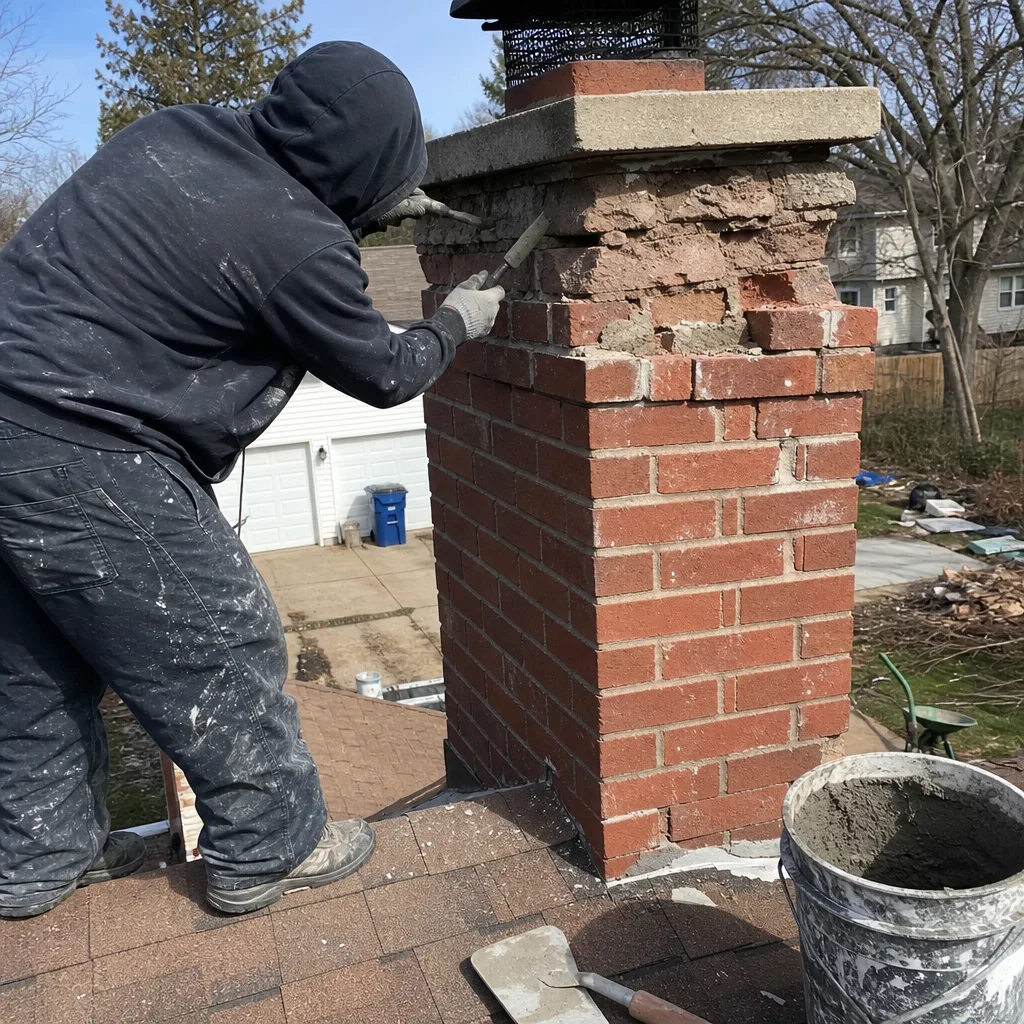
March and April in Arlington Heights look harmless. The snow melts, the forsythia blooms, and homeowners close the damper for what feels like a long, well-deserved break. But the freeze-thaw cycle that defines Chicago-area spring is actively destroying chimney masonry.
Here’s what happens: water enters hairline cracks in the crown or mortar joints during a warm March afternoon. Temperatures drop below freezing that night. Water expands by about 9% as it becomes ice, forcing cracks wider. By morning, the ice melts and drains deeper. Repeat this cycle 40-60 times per spring in Arlington Heights, and a sound crown becomes a failed crown. We’ve pulled crowns off Arlington Heights homes in May that were intact the previous October.
The spring inspection serves a specific purpose: catch moisture intrusion before it reaches the flue liner. A compromised liner in a gas system can vent carbon monoxide into wall cavities. In a wood system, it allows creosote to accumulate in gaps between liner sections, creating a fire hazard that standard sweeping won’t reach.
What we check in spring:
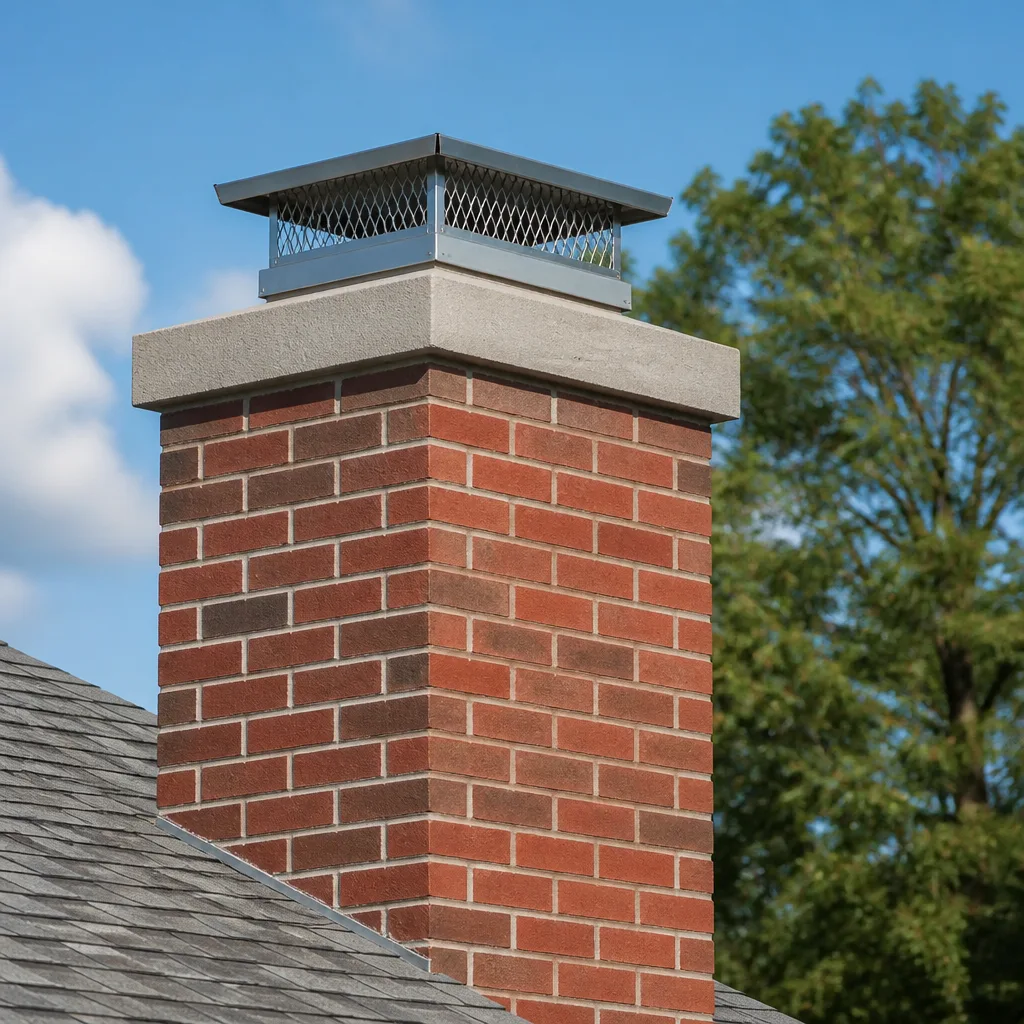
- Crown integrity and drainage slope - water should run off, not pool
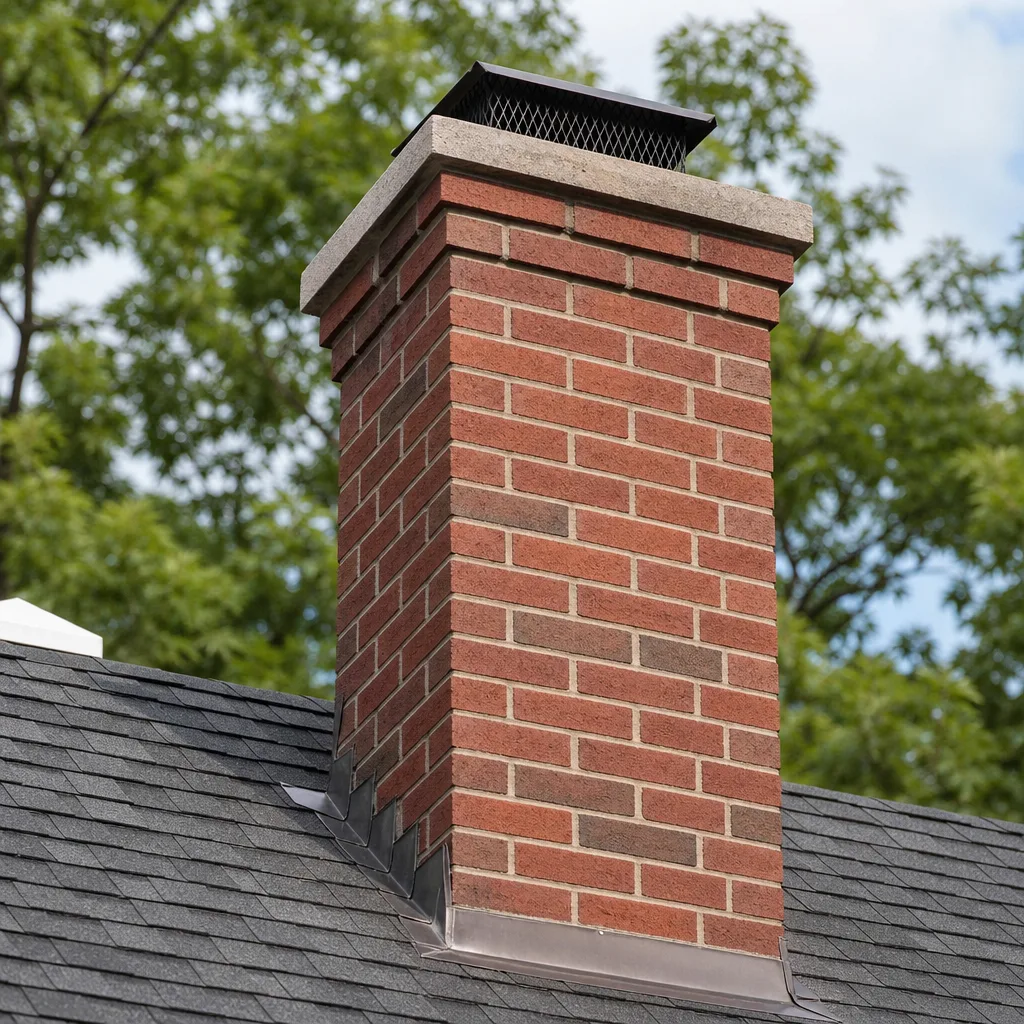
- Flashing seal at the roofline, where Arlington Heights’s wind-driven spring rains find every gap
- Flue liner condition with camera scan, comparing to fall documentation if available
- Smoke chamber and firebox for spalling (flaking brick or refractory panel) from thermal shock
- Damper operation and seal - a stuck-open damper wastes summer cooling dollars
Spring is also when we document baseline conditions. A photo record taken in April, stored under Haven Standard Clause 4, gives us something to compare against in October. Without that record, a technician in fall cannot distinguish three months of deterioration from three years.
Summer: Nesting, Caps, and Storm Repairs
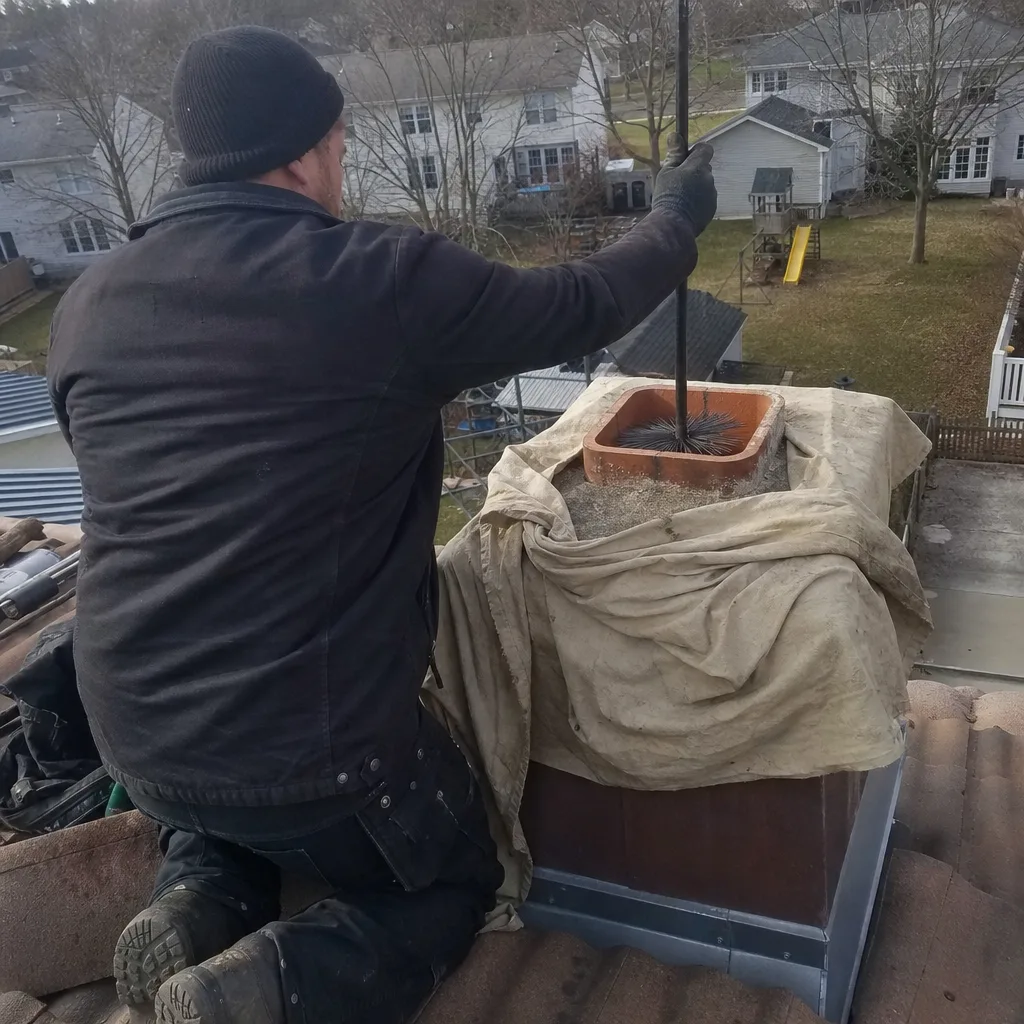
June through August is when Arlington Heights chimneys become real estate for wildlife. Raccoons, squirrels, and starlings evaluate uncapped flues the way you evaluate Zillow listings: shelter, access, proximity to food. A female squirrel can raise a litter in a 12×12 flue and exit through a gap the size of a golf ball.
Nesting material is more than a nuisance. It’s a fire hazard, a blockage risk, and a source of moisture that accelerates liner corrosion. We’ve removed nests from Arlington Heights chimneys in July that contained enough material to block 60% of the flue cross-section. The homeowner smelled it before they saw smoke backing up into the room.
Summer is also thunderstorm season, and Arlington Heights sits in a corridor where severe cells track regularly off Lake Michigan. The two weather events that most commonly damage crowns and caps are:
- Late-season ice storms (March-April): Ice accumulation on caps exceeds structural load, bending or detaching the cap frame and exposing the flue.
- Summer thunderstorms with straight-line winds (June-August): Wind gusts above 50 mph lift poorly secured caps, and the impact of falling branches cracks crowns that were already stressed from spring freeze-thaw.
Cap damage from these events often goes unreported because homeowners aren’t burning and don’t look up. By October, the gap has been open for months, and the first cold snap sends animals inside.
Summer service focuses on:
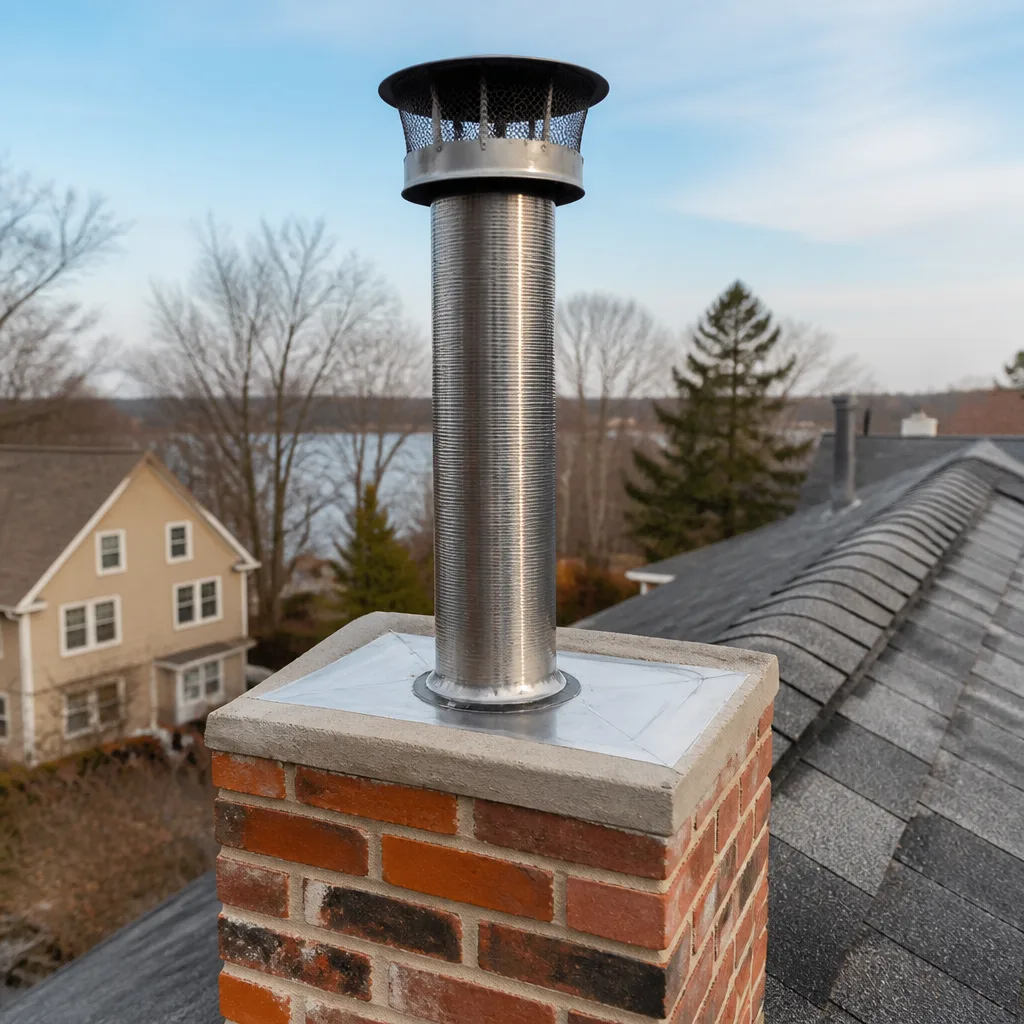
- Cap installation or repair using Gelco or Famco stainless steel caps with proper mesh screening
- Crown sealing with flexible crown coat if cracking is minor, or full rebuild if structural
- Removal of any nesting material and sanitization of the flue
- Inspection of chimney exterior for spalling brick or deteriorated mortar from spring moisture
We recommend scheduling summer work in June, before the July nesting peak and before storm season intensifies. A cap installed in June protects against both.
Fall: Pre-Season Readiness Window
September and October in Arlington Heights compress a lot of urgency into eight weeks. Temperatures drop into the 40s at night, homeowners light the first fire, and every chimney company in the Chicago metro area books solid. The homeowners who planned ahead - who had spring and summer work done - are burning safely by mid-September. The ones who didn’t are calling in October, sometimes after a smoke backup or a carbon monoxide detector alert, and hoping for same-week service that doesn’t exist.
The fall chimney sweep and inspection is not optional for wood-burning systems. NFPA 211, the standard we work to, requires annual inspection and cleaning as needed. See our Chimney Cleaning & Sweep Maintenance Checklist for Arlington Heights Homeowners for a complete seasonal breakdown. “As needed” in Arlington Heights, where seven months of active burning is typical, means every year for wood systems that see regular use.
What fall service includes:
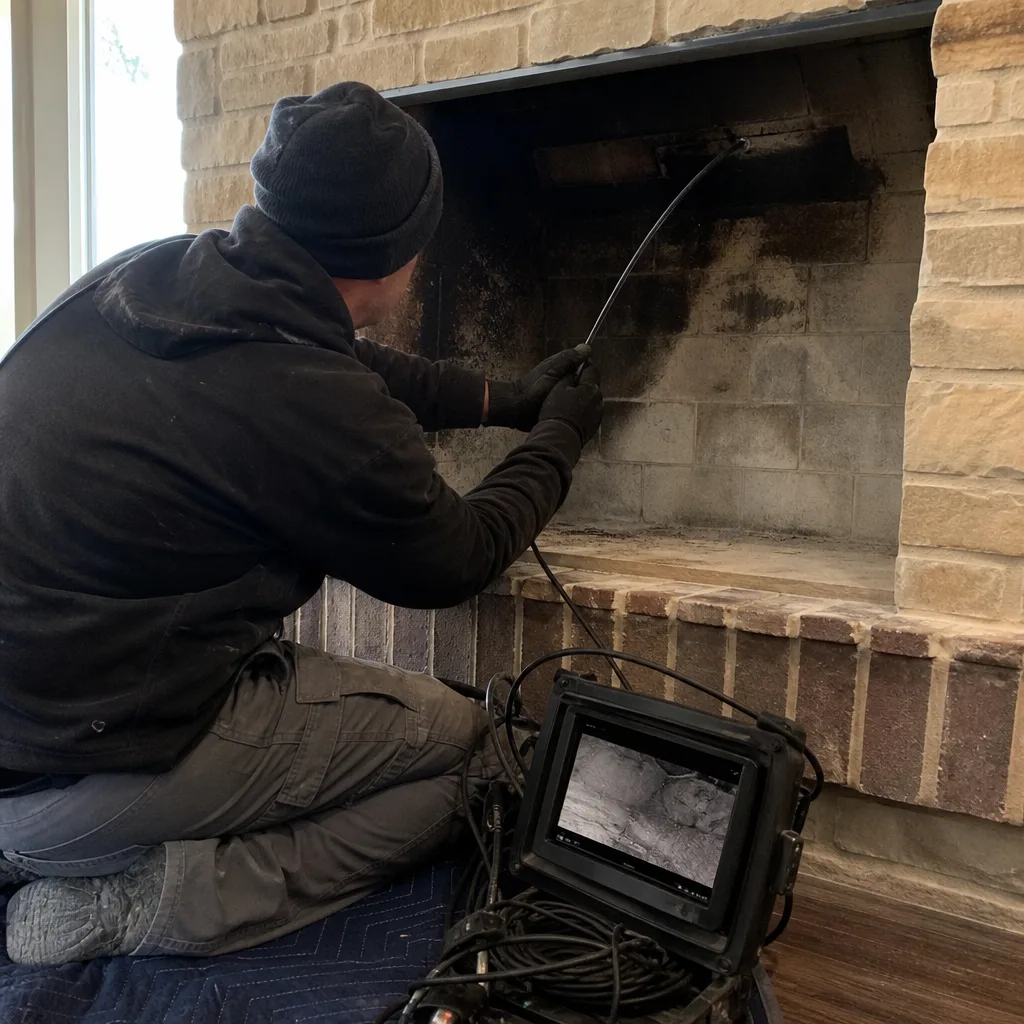
- Camera-scan inspection of the full flue length - NFPA 211 Level 2, our default since 2009. We document every inch with photos, stored under Haven Standard Clause 4.
- Mechanical sweeping of the flue - not a brush that misses corners, but rotary equipment sized to the flue dimension, removing Class I (sooty) and Class II (granular) creosote. Class III (glazed, tar-like) creosote requires chemical treatment and a return visit.
- Smoke chamber parge coating evaluation - the smoke chamber above the firebox is where most chimney fires start, and it’s invisible without a camera.
- Firebox and damper service - refractory panel replacement if cracked, damper adjustment for proper seal.
- Written scope, written price, written warranty before any work beyond the agreed inspection begins - Haven Standard Clause 1.
Fall is also when we see the consequences of deferred summer work. A crown that needed sealing in June, ignored because “we weren’t using it,” is now admitting water that mixes with early creosote to form acidic compounds. That combination eats clay flue tile from the inside out. We’ve documented liner deterioration in Arlington Heights homes where the damage accelerated 300% between a June photo and an October re-scan.
Chimney Cleaning & Sweep in Arlington Heights should be booked by Labor Day if you burn wood regularly. Gas systems have more flexibility, but early fall inspection still catches ignition system and venting issues before heating season demand peaks.
Winter: Creosote Accumulation and Mid-Season Checks
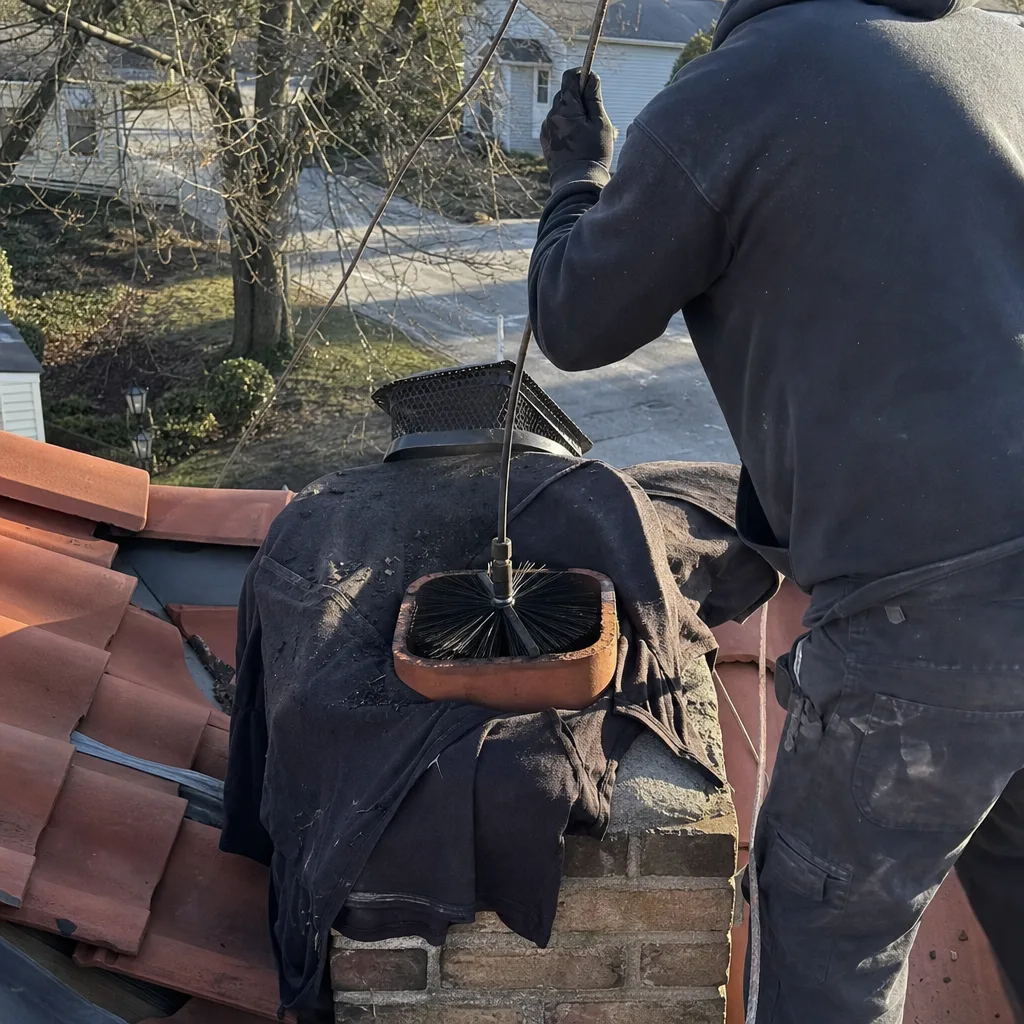
January and February in Arlington Heights are when the serious wood burners separate from the occasional users. A homeowner burning four hours nightly from November through March will produce creosote at a rate that can exceed safe flue capacity before the season ends. The creosote accumulation rate depends on:
- Wood moisture content - below 20% is essential; Arlington Heights’s winter indoor humidity often keeps improperly seasoned wood above 25%
- Burn temperature - smoldering fires produce more creosote than active, visible flame combustion
- Flue temperature - exterior chimneys on north-facing walls (common in Arlington Heights’s Scarsdale and Hasbrook neighborhoods) run colder, causing faster condensation of creosote
- Wood species - oak and hickory burn cleaner than pine or soft maple, which are sometimes sold as “seasoned” after six months
Mid-winter inspection makes sense for heavy users. We don’t necessarily sweep again - though some systems need it - but we camera-scan to measure creosote buildup against the fall baseline. A flue that was clean in October and shows 1/8-inch creosote by January is on track for a hazardous condition by March. Catching that in January lets us schedule a mid-season sweep before the final cold snap, when chimney fire risk peaks.
Winter also reveals operational problems that inspection alone cannot predict:
- Downdraft from Arlington Heights’s winter wind patterns, particularly in homes below the tree line or in the wind shadow of multi-story construction
- Ice dam leakage at the chimney-roof intersection, where meltwater refreezes and lifts flashing
- Carbon monoxide spillage from gas inserts with failed gaskets or blocked termination caps
We recommend a mid-winter check for any wood-burning system used more than 12 hours weekly. The cost is modest compared to a chimney fire or a failed liner discovered in spring.
Why Gas and Wood Fireplaces Need Different Schedules
Treating gas and wood systems identically is a common mistake we correct in Arlington Heights homes. The combustion byproducts are fundamentally different, and so is the risk profile.
Wood-burning systems produce creosote, a combustible deposit that requires mechanical removal. They need:
- Annual sweeping before burn season
- Mid-season camera check for heavy users
- Cap and crown maintenance on the same schedule as the structure, regardless of fuel type
Gas systems (natural gas or propane) burn cleaner but introduce different risks:
- Moisture from combustion condenses in cooler flues, accelerating corrosion of clay tile or stainless steel liners
- Failed ignition components can produce soot that mimics creosote but requires different removal
- Carbon monoxide risk is higher with gas because the fuel burns odorless and the failure mode is silent
Gas fireplaces in Arlington Heights typically need inspection annually but sweeping only every 2-3 years unless soot deposits are visible or the system malfunctions. The inspection focuses on venting integrity, combustion analysis, and ignition system function - not creosote removal.
We’ve inspected gas inserts in Arlington Heights where the homeowner paid for annual “sweeps” they didn’t need, while the actual risk - a deteriorated flex liner with perforations - went undiagnosed because the technician was looking for creosote that wasn’t there. A proper gas inspection requires combustion testing equipment and camera verification of the liner, not a brush.
Fireplace Services in Arlington Heights covers both fuel types with protocols matched to the system, not a one-size-fits-all sweep.
The Two-Minute Post-Storm Ground-Level Check
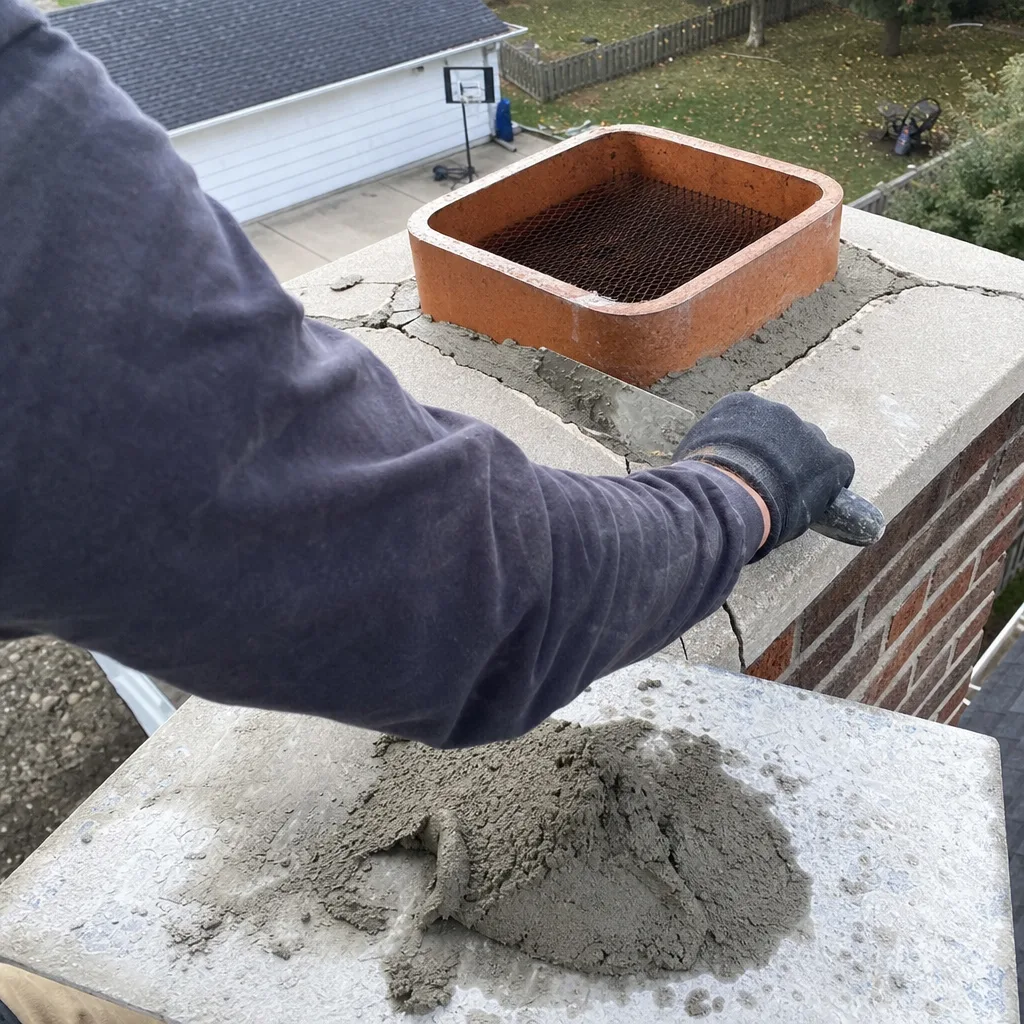
After the two weather events that most damage Arlington Heights chimneys - late-season ice storms and summer thunderstorms - you can assess whether an unscheduled inspection is warranted without climbing a ladder. Do this from ground level with binoculars or a phone camera zoom.
- Look at the cap. It should sit squarely on the crown with no visible tilt, gap, or missing mesh. If you can see into the flue from the ground, the cap is displaced or missing.
- Scan the crown surface. It should appear as a solid, slightly sloped concrete or sealant layer with no visible cracks or vegetation growing from joints. Dark streaks running down the chimney face suggest crown failure.
- Check for new debris. Branches, cap pieces, or masonry fragments on the roof or ground near the chimney base indicate impact damage.
- Examine flashing. From the ground, look for lifted or separated metal where the chimney meets the roof. Shingle displacement around the chimney base is a secondary indicator.
- Note any animal activity. Scratch marks on the masonry, nesting material visible in the flue opening, or vocalizations from inside the structure warrant immediate inspection.
If any of these five checks reveals an issue, schedule an inspection. Don’t wait for your annual visit. A displaced cap in June admits rain and animals for four months before fall service catches it.
For Chimney Repair in Arlington Heights, we document storm damage with the same camera-scan protocol as routine service, and we provide written repair scope and price before any work begins.
How Service History Changes What Your Technician Can Find
A first-time sweep starts from zero. They can describe what they see today. They cannot tell you whether that crack is new or ten years old, whether creosote buildup is accelerating or stable, or whether the liner deterioration they observe is normal aging or an active failure.
A documented service history changes everything. Since 2009, Level Two Chimney Co. has maintained a photo record on every visit - Haven Standard Clause 4 - creating a longitudinal archive that lets us compare year-over-year deterioration rates.
Here’s what that enables:
- Rate-of-change analysis: A hairline crack in 2022 that widened to 1/8 inch by 2024 is structural movement requiring intervention. The same crack stable at 1/32 inch across five years is monitoring-only.
- Creosote accumulation tracking: We measure deposit thickness at consistent flue locations. Accelerating buildup signals a change in burning practice or fuel quality, not just normal use.
- Liner corrosion forecasting: Stainless steel liners show pitting patterns that predict failure 3-5 years in advance if documented annually. Clay tile shows spalling progression that indicates when relining becomes necessary.
- Warranty and insurance documentation: Time-stamped photo records support claims for storm damage, manufacturing defects, or installation errors that surface years later.
Homeowners who bought their Arlington Heights home between 2015 and 2025 - our typical customer - often inherit a chimney with no history. We establish that baseline on the first visit and build from there. By the third visit, we can tell you not just what needs attention, but what you can defer safely, with evidence.
This is why we don’t offer one-time “cheap sweeps.” A sweep without documentation is a snapshot without context. It tells you what a technician saw, not what it means for your system.
What Seasonal Chimney Care Costs in Arlington Heights
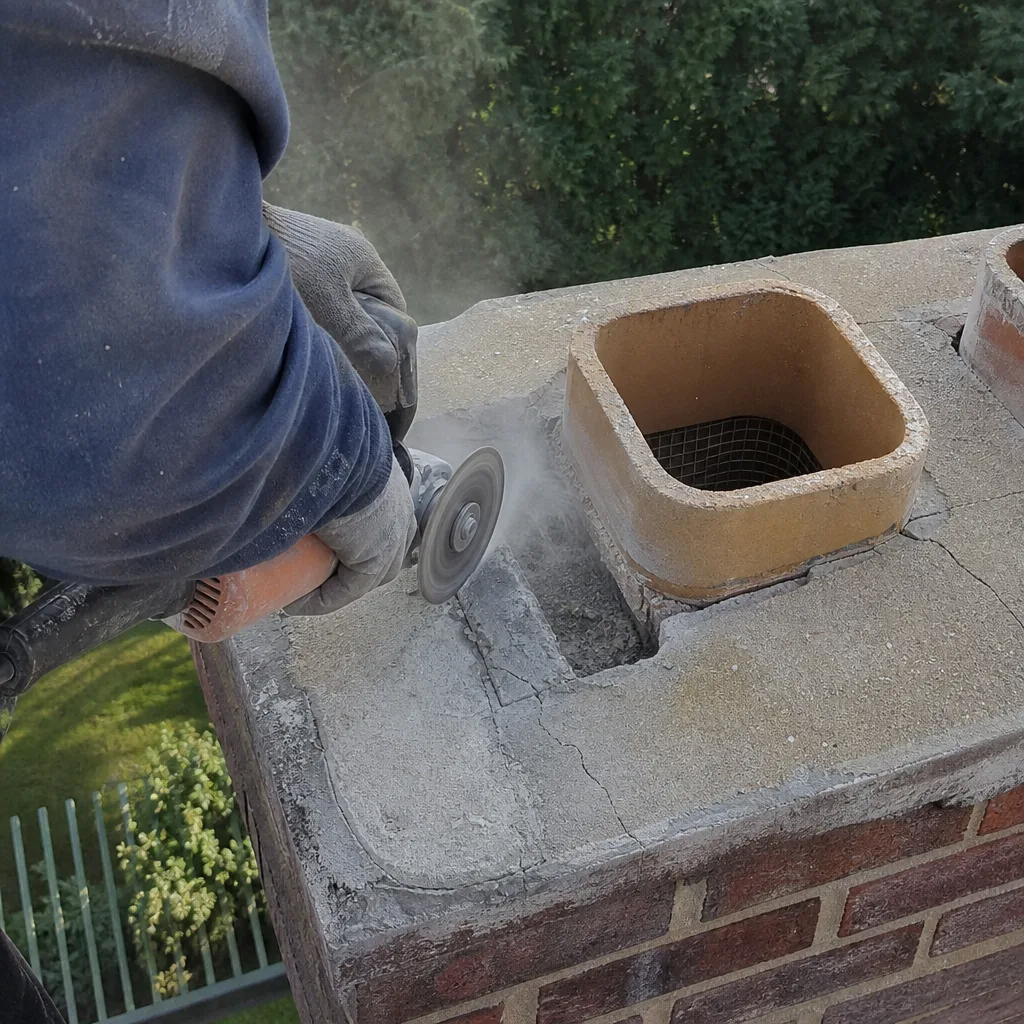
Chimney service pricing in Arlington Heights reflects the scope of inspection, the condition found, and the season. Below are typical ranges for work performed by Level Two Chimney Co., with written price confirmed before any work begins on every job.
| Service | Typical Range | What’s Included |
|---|---|---|
| NFPA 211 Level 2 Inspection with Camera Scan | $249-$349 | Full flue camera inspection, smoke chamber and firebox evaluation, documented photo record, written report |
| Chimney Sweep (Wood-Burning) | $189-$289 | Mechanical rotary sweeping, debris removal, damper cleaning, Level 2 inspection included |
| Chimney Sweep (Gas) | $149-$219 | Visual and camera inspection, ignition check, venting verification; sweeping only if deposits found |
| Cap Installation (Standard Stainless) | $285-$475 | Gelco or Famco stainless cap with mesh, custom fit, installation, warranty |
| Crown Seal/Repair | $425-$895 | Minor crack seal to full crown rebuild depending on condition |
| Mid-Season Camera Check | $149-$199 | Camera scan and comparison to fall baseline, no sweeping unless indicated |
These are Arlington Heights market ranges based on our 38,000+ completed jobs since 2009. Exact price depends on flue configuration, access difficulty, and material condition - which is why we deliver a written, itemized price before any work starts, not after we’re in your home. Haven Standard Clause 1: have it in writing.
We also offer a Free Second Opinion on any written estimate from another company. Bring us their scope and price, and we’ll review it against what our camera finds.
Common Mistakes to Avoid
- Scheduling only in October. By then, every reputable sweep in Arlington Heights is booked two weeks out, and you’re burning before inspection. Spring and summer booking guarantees fall readiness.
- Assuming gas means no maintenance. Gas systems need annual venting inspection. The failure mode is carbon monoxide, not creosote, and it’s invisible without combustion testing and camera verification.
- Ignoring the cap because “it looks fine from the driveway.” Cap displacement of even half an inch admits water and animals. Ground-level binocular inspection takes two minutes; deferral costs hundreds.
- Burning “seasoned” wood that’s six months old. In Arlington Heights’s humid summers, six months is insufficient. Wood needs 12-18 months stacked with airflow, moisture below 20%. Wet wood doubles creosote production.
- Treating chimney sweeping as a commodity purchase. The cheapest sweep skips the camera, provides no documentation, and cannot tell you whether conditions are stable or deteriorating. You save $80 and lose the data that prevents $3,000 liner replacement.
- Waiting for smoke backup to indicate a problem. By the time smoke enters the room, the flue is dangerously obstructed or the liner has failed. Preventive inspection catches these conditions before symptoms.
- Failing to match service to actual burn patterns. A homeowner who burns two weekends per winter needs different service frequency than one who heats primarily with wood. We adjust scope to use, not to a calendar.
When to Call a Professional
Call for inspection, not just cleaning, when you observe any of the following: visible cracks in the crown or masonry, rust stains on the chimney face, a displaced or missing cap, smoke odor when the damper is closed, debris falling into the firebox, or any carbon monoxide detector activation near the fireplace. After any ice storm or severe thunderstorm with wind gusts above 50 mph, perform the ground-level check described above and schedule inspection if anything looks changed.
Level Two Chimney Arlington Heights offers free estimates in Arlington Heights. Call (331) 202-2419 to schedule, or to bring us a competitor’s written quote for a Free Second Opinion. Live phone support runs 24 hours a day, 7 days a week - you’ll speak to a person, not a voicemail system.
Frequently Asked Questions
A standard chimney sweep with NFPA 211 Level 2 camera inspection in Arlington Heights typically runs $189-$289 for wood-burning systems and $149-$219 for gas. The exact price depends on flue configuration, access, and what the camera reveals. We deliver a written price before any work starts - call (331) 202-2419 for a free estimate.
Wood-burning chimneys need sweeping annually before burn season, and mid-season for heavy use. Gas systems need annual inspection but typically only sweeping every 2-3 years unless deposits or malfunctions occur. Arlington Heights’s seven-month burn season and freeze-thaw climate make spring and fall the critical inspection windows.
You need a new liner when camera documentation shows perforations, gaps between sections, or deterioration that compromises containment of combustion byproducts. We never recommend liner replacement without photo evidence you can see, and we distinguish conditions that require immediate action from those that can be monitored annually. If another company recommended a liner without showing you camera footage, get a Free Second Opinion.
Skipped cleaning allows creosote to accumulate to hazardous levels in wood systems, increasing chimney fire risk and potentially cracking the flue liner from thermal shock. Before scheduling any work, review Chimney Cleaning Permits, Codes & Inspections in IL: What You Need to Know to ensure compliance. In gas systems, deferred inspection misses deteriorated venting that can leak carbon monoxide. Both failure modes develop silently; detection requires camera inspection, not guesswork.
Homeowners can inspect the firebox and damper visually, but flue cleaning requires rotary equipment sized to the flue dimension and camera verification that the cleaning was complete. More critically, creosote removal disturbs material that is both toxic and combustible; proper containment and disposal require training. For safety, we recommend professional service for all flue work.
Summer chimney odor usually indicates creosote deposits absorbing humidity, animal intrusion, or a failed damper seal allowing downdraft of outside air. Arlington Heights’s summer humidity amplifies creosote odor significantly. A camera inspection identifies which cause applies and whether sweeping, animal removal, or damper repair is needed.
A Level 1 inspection is a visual check of accessible portions - what you can see without tools. A Level 2 inspection, which we perform on every visit as our default, includes camera scan of the full flue length, attic and crawl space access if safe, and documented photo record. NFPA 211 requires Level 2 for real estate transactions, after chimney fires, and when any change to the system occurs. We’ve made it our standard since 2009 because flashlight inspections miss what cameras find.
The Bottom Line
Arlington Heights’s climate creates four distinct chimney risk profiles, and one annual visit cannot address them all. Spring catches moisture damage, summer prevents animal intrusion and storm damage, fall ensures clean safe burning, and winter monitoring protects heavy users from mid-season creosote hazard. Gas and wood systems need different protocols. Documentation from each visit enables year-over-year comparison that transforms guesswork into measured decision-making. The homeowners who avoid November emergencies are the ones who treated chimney care as a system, not a single appointment.
Level Two Chimney Arlington Heights home | Call (331) 202-2419 for a free estimate. Written price before any work starts. Camera-scan documentation on every visit. 365-Day Done Right Promise. Free Second Opinion on any written estimate.
Written by Corrine Halstead, Owner at Level Two Chimney Arlington Heights, serving Arlington Heights since 2009.